


Indonesian>English translator Christine Berry reflects on a significant difference between Bahasa Indonesia and English that she has gradually become aware of over many years.

… in this language, pronouns take a back seat … they are just not that important.
Recently in Western, English-speaking countries, pronouns have become political.
Donald Trump made effective use of them in his recent re-election campaign, notably with the slogan ‘Kamala Harris is for they/them. Donald Trump is for you.’
As a translator from Bahasa Indonesia to English I have mulled over the near impossibility of translating this campaign slogan into Indonesian.
The more I have become exposed to the Indonesian language, the more I have realised that in this language, pronouns take a back seat – they are just not that important.
For example, when learning Bahasa Indonesia, a standard textbook will inform you that ‘engkau’ is second person singular (2ps) for ‘you’ and ‘kalian’ is second person plural (2pp), used with equals and younger persons of lower status. However, ‘kamu’ can be both singular and plural, but is familiar. A good textbook will also include ‘anda,’ which is second person and is mainly used in formal environments or when the referent is unknown, such as in advertisements.
Confused? Definitely! In fact, when I was living in Indonesia I noticed that many expats would simply say ‘you’ in English, to get around the issue of which pronoun to use.
Immersed in the culture and the language, I came to realise that the correct way to address others was not clearly explained in the textbooks that I had at that time. Excepting the first person pronouns, in singular form saya and aku, Indonesian seems to have a distaste for or reluctance to use pronouns. Although textbooks and dictionaries might state that when meeting friends or peers certain pronouns are used, in reality the personal name, kinship relationship or title are often used.
When writing emails, using the recipient’s name instead of the pronoun could become quite an acrobatic manoeuvre. For example, if I was emailing Maria to arrange a time to meet, I would ask in Indonesian, ‘When is a good time for Maria to meet me?’
In West Papua, when addressing a peer or even a friend, the usual practice is to use their name. For example, ‘Good afternoon Maria. Did Maria visit the clinic yesterday?’
From observation (not instruction), I learned that using the personal name was fine among friends, but in more formal settings I should show respect by adding a title, for example ‘Ibu Maria’ (‘Missus Maria’). ‘Ibu’ translates literally as ‘mother,’ but is generally used as English uses ‘Missus’ or when greeting older women. Likewise, ‘bapak’ means ‘father,’ but one would address a teacher as ‘Bapak guru’ – ‘Mister teacher’ being an approximate English translation.
A preference for reference
I originally learnt Bahasa Indonesia many years ago, and I have spoken it for many years, but it is only recently that I am learning to ‘unwire’ my English-speaking pronoun-oriented brain in order to speak Indonesian as Indonesians do!
As a speaker of Bahasa Indonesia I have to stop and think twice. Unlike English conversations involving the second person, the pronoun is often not used, and instead I need to consider the work relationship or status that I have with the person I am talking to. Are they older or younger? What is the appropriate title or term of address? Again with family members, are they older or younger? What is the appropriate kinship term? It is not simply a matter of learning ’engkau,’ ‘kamu’ and ‘kalian’ from a textbook.
In order to confirm my suspicions, I recently checked with an Indonesian family member how they would word certain questions in Indonesian. Here are some of the examples I elicited:
When speaking to a close friend, should I use a second person singular pronoun as in English?
1. ‘What food are you cooking for the Arisan* on Wednesday?’
Bu, hari Rabu Arisan nanti kamu rencana masak apa?
Mother, day Wednesday Arisan later 2ps plan cook what
Alternatively, ‘dirimu’ (literally ‘yourself’) could be used instead of ‘kamu.’
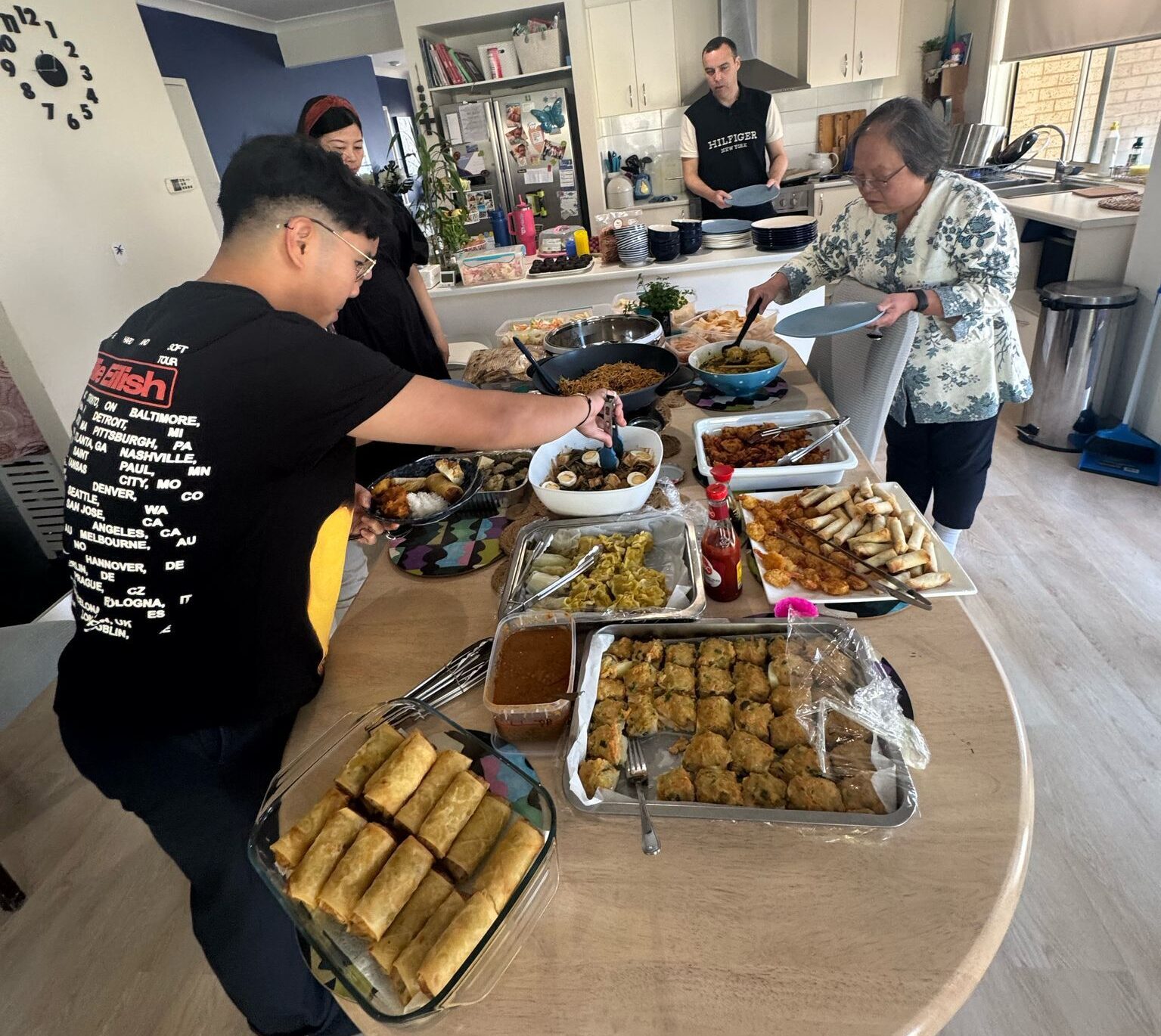
* Arisan is an Indonesian ladies’ gathering, focused originally on group savings, but now more on eating and having fun together.
2. ‘Can you look after Joni on Thursday afternoon?’
Bu/Lina, nanti hari Kamis kamu bisa jaga Joni?
Mother/Lina, later day Thursday 2ps can look after Joni
In this context either ‘Bu’ or the friend’s name – here it’s Lina – could be used.
3. ‘Did you go to the Festival last Monday?’
Dirimu datang kemarin hari Senin ke Festival?
2ps come yesterday day Monday to Festival
4. ‘Did you enjoy it?’
Gimana bagus, nggak?
How very good or not?
All the above examples use a term of address – either the term ‘Bu’ or the friend’s name – in conjunction with a pronoun. However in sentence 4, no pronouns were used at all.
What happens when addressing a relative?
5. ‘Did you advise Felicia to buy a new car?’
Kakak, saranain Felicia untuk beli mobil baru?
Older sibling advise Felicia to buy car new
6. ‘Do you have any plans to go to Jakarta again?’
Kakak, udah ada rencana mau ke Jakarta lagi?
Older sibling already are there plan intend to Jakarta again
In these last two examples no pronouns are used at all; the conversation is between what we would call in-laws in English, and the pronouns are replaced by kinship or relationship terms. In English I might use a personal name to indicate who I am speaking to, but I would definitely follow it up with a pronoun, and I would not say ‘sister,’ even for my own biological sister!
As a translator, I now recognise that there are quite a number of situations in which I need to insert pronouns into the English translation. The few examples I have given indicate that pronoun usage in Bahasa Indonesia is significantly lower than in English, so to replicate the grammar of Bahasa Indonesia in regards to personal reference will not always produce a ‘natural’ English sentence.
As to current discussions about pronoun usage, I feel that there are lessons to be learnt from Bahasa Indonesia. This language shows us that there are other options in how to refer to someone else. It also shows us that knowing another language and culture broadens our life experience and our speech, beyond the limitations of our own language.
Christine Berry is a NAATI-certified Bahasa Indonesia>English translator based in Melbourne. She has a master’s degree in linguistics from La Trobe University and has worked as a linguist, and in women’s literacy and health in remote communities, and she is currently a freelance translator. Christine loves gardening, cooking and eating Indonesian food, and spending time with her grandchildren.