


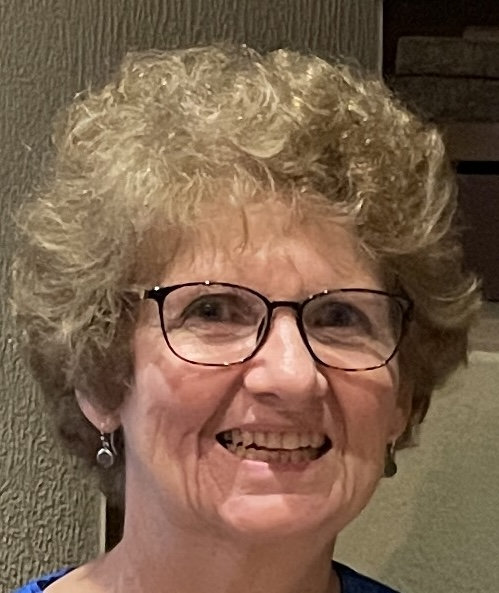
When experienced translator Michele Miller decided to enrol for her master’s in translation, some of those close to her queried why. Here she examines the experience, and also her own motivation.
… my French teacher was given permission to start teaching Japanese … I jumped in, boots and all!
I’m a firm believer in CPD. It’s important for professional growth and personal fulfilment.
Time flows, the world changes, and our knowledge should flow and change too. As professionals, we should continue to top up our reservoir of knowledge and skills, rather than stagnating. Conferences and PD events keep us abreast of changes, but COVID gave me pause to reflect on what else I could learn.
As a result, in early 2022 – aged 68 – I enrolled in the Master of Translation program run by the School of Humanities & Languages within the Faculty of Arts, Design & Architecture at UNSW Sydney.
Family and friends asked, ‘Why on earth are you doing a master’s in translation?!’ – meaning (parenthetically), ‘You’ve been a translator all your life, what else is there to learn?’
Truth be told, there was a lot else to learn. I thought it would be easy to fit study in between working from home and COVID. Online classes, piece of cake! But it was T.O.U.G.H. As a mature-age student, I was the oldest in each of my courses. I had to navigate the ins and outs of onboarding and manage my courses across a host of new platforms – made harder by the fact that I had no recent education experience to fall back on. I had to balance my academic commitments with the demands of a translation practice, family commitments, and the need to stay fit and healthy along the way.
As background, I first became curious about Japan while at primary school in Tasmania in the 1960s, when doing a project. A photo of the Great Buddha of Kamakura cemented my interest. Then, at matriculation college (years 11–12), my French teacher was given permission to start teaching Japanese … and I jumped in, boots and all!
I matriculated with a Commonwealth scholarship to ANU, but – to my parents’ surprise – I’d also applied for a scholarship from the Japanese government. They supported my decision to study in Japan, as it was the best way to learn the language and understand the culture.
Study started in 1973 with an intense one-year language course at the Japanese Language School attached to Tokyo University of Foreign Studies. This was followed by a four-year undergraduate program. I graduated with a BA from the Special Department of Japanese Studies in 1978.
So why on earth did I go back to study as a mature-age student? Firstly, after 40 years as a professional translator (including several years spent managing a translation department for a multinational IT firm), I wanted to acquire new skills that would equip me for the changing landscape in translation and the changing hierarchy among practitioners. Upskilling is something one can easily neglect in the hurly-burly of business life.
Secondly, real-world translation experience naturally makes for a disciplined and analytical mindset, providing a solid foundation for the rigorous demands of a master’s program. Having this background helped me to research, make complex translation decisions (and justify them), and generally stay the distance.
Thirdly, studying in a formal setting promised a chance to meet and interact with students from diverse linguistic backgrounds, learn how they approach translation, and share some of my practical experience.
But as I said, it was tough. I was initially ill-equipped to handle the steep learning curve required to manage enrolment and course selection. I also lacked the necessary academic writing skills, but worked hard to overcome that.
There were courses I relished, including cross-cultural pragmatics, discourse analysis, multimedia translation, and translation technology. The process of learning new theories, engaging with contemporary research, and mastering complex translation techniques was profoundly rewarding.
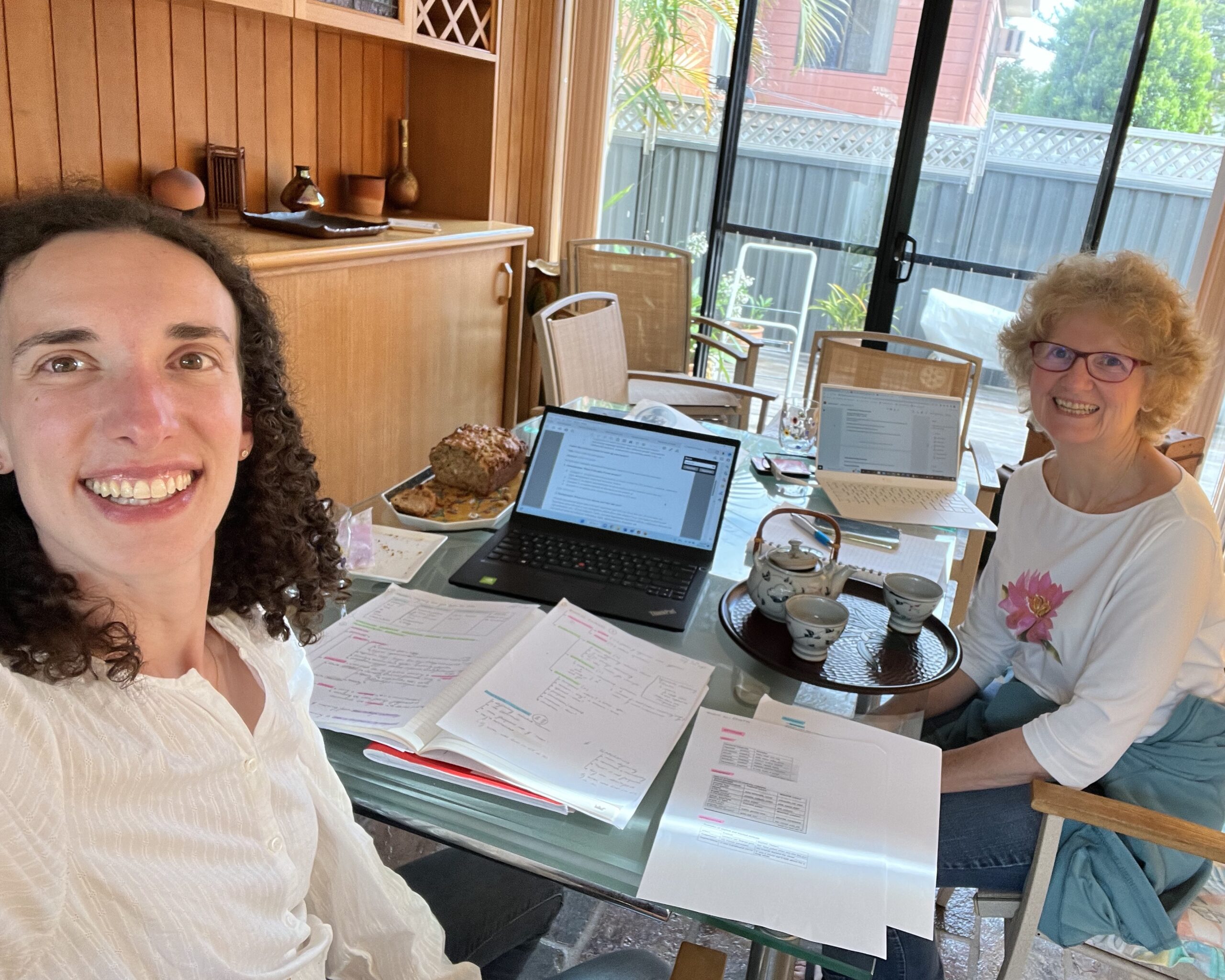
I enjoyed discussing topics such as humour across different cultures – zany Australian sayings that I found hilarious were not always funny for my classmates, and vice versa, but discussing humour helps improve intercultural communication and understanding.
If there was a downside to my university experience, it would have to have been the errors (factual, typographical, grammatical) in some lecture slides, and outdated content here and there; but as university is an open learning environment and translation is, after all, a discipline that demands precision, I addressed these issues where appropriate.
In other areas, I did wish that more students would turn on their cameras, engage, converse, and be truly connected – this was vexing for me, and must have been doubly so for lecturers, who rely on communication and even passing signs of agreement and disagreement from students.
Having said that, classroom culture is an interesting topic in itself. I remember one lecturer at my university in Japan lamenting that the most unnerving thing about teaching foreign students was that we looked him directly in the eye during lectures, rather than averting our gaze.
I graduated from UNSW with a Master of Translation With Excellence in August 2023, completing the degree in 1.7 years. This was not a qualification that I needed in order to secure a job, run a business, or get my foot in the translation door. It was me challenging myself to acquire new skills and perspectives, connect with people during COVID, and continue lifelong learning. Winning an AUSIT Student Excellence Award along the way was an unexpected extra honour, and one that I hope inspires others. Indeed, to echo the words of US author and academic Isaac Asimov, ‘You are never too old to learn more than you already know and to become able to do more than you already can.’
Michele Miller is a Sydney-based Japanese–English translator with 46 years’ experience, specialising in IT, legal, estate and financial loan-related translation, and certificate translation. With a language and literature degree from a major Japanese university but no formal translation education or training, she commenced as an in-house translator in an IT firm, became the manager of their translation department, and eventually went freelance. She has just completed two months’ language maintenance in Japan, where she also gave a talk at a university reunion on her recollections of studying in Japan in the 1970s.
Advertisement: