




From your National President
Esteemed Members, Colleagues:
Cyclone Alfred
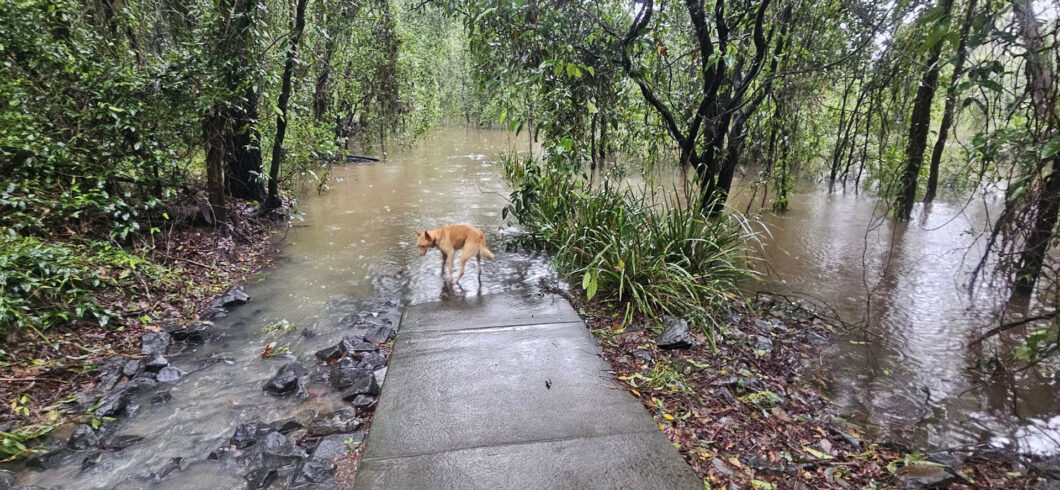
This month, southeast Queensland and northern New South Wales contended with Ex-Tropical Cyclone Alfred. Our National Office, being based in Logan, experienced Internet and power outages, and juggled the situation at work and at home, as did I and many members in the region.
The situation is more or less back to normal. Recovery efforts are still being made in areas hit with flash flooding. I hope all practitioners affected by Cyclone Alfred are safe and able to access support if needed.
Clarification
You may recall that in the last President‘s Newsletter I responded to reports of individuals claiming credentials they did not have. I wrote:
A common example involves practitioners who were accredited under the previous system continuing to advertise themselves as ‘Accredited’ or ‘Certified’ despite never completing the certification process.
What I should have said is:
A common example involves practitioners who were accredited under the previous system advertising themselves as ‘Certified’ despite never completing the certification process.
‘Accredited’ and ‘Certified’ are both credentials that may be claimed by practitioners who legitimately hold them. I didn’t intend to imply that the validity of Accreditation lapsed when the new scheme was introduced; indeed, I myself continued to practise as an Accredited translator for some time before transitioning to Certified. I do not believe that practitioners who accurately advertise themselves as ‘Accredited’ are acting fraudulently.
My intended point is that fraudulent representation of any credential is unfair on all of us. When this happens, we end up having to compete with unqualified bilinguals for jobs in an already incredibly competitive market. The best way to stamp out these instances of fraud is to report them directly to NAATI.
On a separate but related note: some AUSIT members are unhappy with NAATI certification, believing that Accreditation and/or other qualifications are sufficient. While I respect their right to hold this view, I do not agree with them. Certification not only shows that the practitioner has the required linguistic, cultural and ethical know-how, but that they are actively practising and committed to lifelong learning through continuous professional development. Users of T&I services cannot be assured of these essential professional attributes by an Accredited credential alone.
I therefore encourage Accredited practitioners to transition to Certified if possible. As it happens, I renewed my ‘Certified Translator and Interpreter’ credentials just last week for another three years. I’m proud of this achievement, and celebrate when colleagues successfully recertify too.
AUSIT's FIT membership
Some practitioners may not be aware that AUSIT is a member of the International Federation of Translators (Fédération Internationale des Traducteurs, or FIT). FIT is a global federation connecting T&I networks across more than 100 countries, with 110 active Regular Member associations. FIT ‘supports members and the profession at an international level, building community, visibility and a sustainable future for the profession’ (read more here).
For AUSIT members, the benefits of FIT membership include:
- international recognition through adherence to global quality and ethical standards
- networking opportunities at international conferences and workshops
- access to global research, publications and industry resources
- global advocacy for translator and interpreter rights and recognition
- enhanced professional development through webinars, publications and mentorship
- eligibility for FIT Awards, bringing international prestige
- increased organisational attractiveness to potential new members.
AUSIT’s annual FIT membership fee is 3.10 Swiss Francs per member (at invoice time), capped at a maximum 4,500 Swiss Francs and paid in two instalments over the year. The exact cost per year in Australian dollars depends on the exchange rate, and in February 2024 we paid $8,052.94.
We are currently awaiting this year’s invoice due to delays at FIT’s end, and given AUSIT’s annual budget deficit, plus the fact that it’s been many years since AUSIT members have had a say in this matter, the National Council intends to ask you to vote on whether AUSIT should continue its FIT membership.
It is essential that you are well informed before you vote. I encourage you to learn more about FIT (visit its website here) and carefully consider whether you think membership is a worthwhile use of AUSIT’s funds. I also would appreciate input from members on the pre-vote educational campaign. Please email me if you would like to contribute (president@ausit.org).
NAATI Digital Stamp Refusal
I’ve received reports from AUSIT members of certain government agencies such as ASIC refusing to accept their NAATI digital stamp. I understand that NAATI undertook widespread consultation during the development of the stamp. However, there are thousands of agencies and businesses that accept translations from NAATI-certified translators. As a result, there may be some individuals or organisations that are unwilling to accept the digital stamp.
I’ve followed up with NAATI on this matter. They advised me that NAATI is continuing to educate stakeholders on the advantages and security of digital stamps, which they hope will lead to broader acceptance. I encourage practitioners to contact NAATI if your digital stamp is ever refused; NAATI then can follow up and advocate for its acceptance by the relevant agency.
Updated Organisational Chart
AUSIT is a large national organisation. We are not for profit and run by volunteers. Some may be confused about how we operate. With this in mind, the National Council and I have updated the ausit.organisational Chart to more clearly represent our association’s structure. You can download it, and also find more information about AUSIT’s structure, on our website here.
You can see that AUSIT consists of three main components. The National Council comprises 14 elected volunteer positions. We broadly represent translators and interpreters across Australia, as well as the organisation on a national level.
AUSIT’s Committees are organised into 13 categories. The Branches represent T&I practitioners at the state and territory level, while the special committees and Language Divisions support, represent and advocate for members in various ways.
All Committees report the progress of their work to the National Council, either directly, or via one of the Vice Presidents or Branch Chairs. This is important to ensure transparency of all decisions that are made within our democratic, volunteer-led organisation.
Finally, there are nine Administrative Officer paid positions. Four of these are filled by Office Logistics, a private company who have been providing our National Office admin services extremely efficiently since 1 January 2020; the others are individually appointed. These roles maintain AUSIT’s daily operations and ensure continuity of service, as membership in the National Council and Committees changes over time.
I hope this new Organisational Chart will help members and non-members alike to better understand the people that make up AUSIT via its ‘bird’s-eye view’ of the organisation.
Thank you for taking the time to read this month’s President’s Newsletter.
I wish you an enjoyable month ahead.
With warmth and gratitude,
Carl Gene Fordham
AUSIT National President


Supporting Professional Standards Visit our website Check our Professional Development page for upcoming PD events Read our award-winning quarterly magazine In Touch Find past newsletters and magazine articles on our blog This communication direct from AUSIT is part of your membership benefits. |
Copyright © 2024 AUSIT, all rights reserved |