



From your National President
Esteemed Members, Colleagues:
Welcome to the January/February 2026 AUSIT President‘s Newsletter, I hope you have had a great start to the year.
I am delighted to share some important updates with you below.
Connecting with members in Brisbane
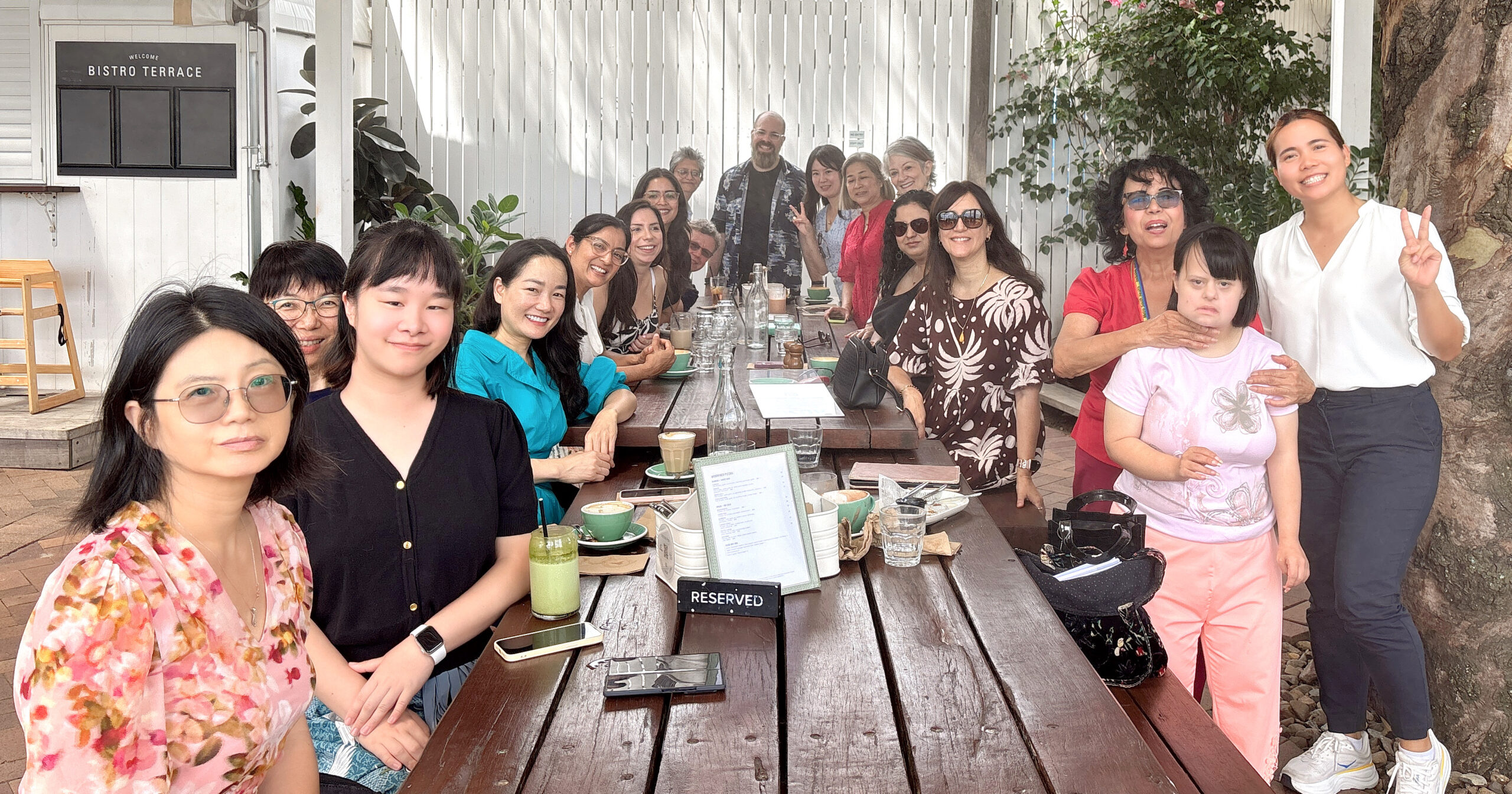
It was a great pleasure to attend our recent social gathering, Brunch in the Park, in Brisbane. Events like this are a wonderful reminder of the strength and warmth of the AUSIT community. Members had the chance to share insights into their daily challenges, discuss the latest industry trends, and enjoy relaxed, meaningful conversation with friends and colleagues. The beautiful surroundings made it the perfect setting to reconnect and unwind together, and I left feeling truly inspired by the people in our profession. A big ‘Thank you!’ to the Queensland Branch for organising this event. I look forward to attending other social events at other branches throughout the year.
ASLITA's new President
I am delighted to congratulate Rachel Lai on her recent appointment to the Board of the Australian Sign Language Interpreters and Translators’ Association (ASLITA) as President. This is a well-deserved recognition of her dedication and expertise. I very much look forward to working with ASLITA under Rachel’s leadership on matters of shared interest to our two associations. I have no doubt she will bring great energy and vision to the role.
A warning from the UK we should all heed
You may have seen recent news from the United Kingdom, where the Institute of Translation and Interpreting (ITI), the Chartered Institute of Linguists (CIOL) and the Association of Translation Companies (ATC) have published a joint report in response to threatened cuts to language degrees at universities across the country. The report called on universities to recognise language provision as a strategic investment, to drive innovation in course design, and to build stronger partnerships with employers and professional associations. While this is a UK development, it carries a clear and important message for our own industry here in Australia. The delivery of translator and interpreter training is directly tied to the future of our profession. Without strong, well-resourced language and interpreting programs in our universities, the pipeline of skilled, qualified practitioners that our communities and institutions depend upon is put at risk. AUSIT will continue to monitor developments like these closely, and to advocate for the recognition of quality education and training as the cornerstone of a thriving translation and interpreting industry in Australia. I share the links below for your reference:
- the news story – Universities hold the key to reversing the UK’s language crisis
- the report – The strategic case for languages in UK higher education
Preventing and resolving disputes within AUSIT
One area I have identified as a priority this year is how AUSIT handles disputes within the organisation. Unresolved disputes can harm our safety, reputation and volunteer engagement, and I have been actively seeking member input to both improve our dispute resolution processes and prevent disputes from arising in the first place.
I am particularly grateful to the Ethics and Professional Practice Committee (EPPC) for the excellent advice they have provided to the National Council on this matter. I have also been in close contact with veteran members, including numerous Past Presidents, whose experience and perspectives have been invaluable.
It has become clear that two things need to happen. First, we need a dedicated internal code of conduct for members – something separate from our existing Code of Ethics, which primarily governs conduct in our professional roles as translators and interpreters. This new code would guide member interactions, promote respectful conduct and constructive feedback, and direct dispute resolution. Second, AUSIT needs a dispute resolution mechanism that is both transparent and effective. At our last National Council meeting, colleagues agreed in principle to both initiatives, and we will be working through the details in the coming months.
I warmly encourage any member who would like to contribute ideas to this process to contact me directly by email. If you have previously experienced a dispute with a fellow member or with AUSIT itself, I would like to hear how it was resolved and whether you felt AUSIT could have handled it better. Just please keep your description brief and to the point, and avoid sharing any identifying details.
Finally, I want to emphasise how important it is for all Branch position-holders to have a clear understanding of their roles and responsibilities. I encourage all position-holders to read their position descriptions carefully. In moments of confusion or dispute, they can serve as a very useful guide.
PD in 2026 – Update from Michael
I have one burning question that is fundamentally behind what I am aiming to do this year in PD: ‘What should you learn if the industry you are working in will no longer exist in three years’ time ?’
That may sound extreme, but I see it as a potentially realistic outcome of current technological advancements. Timelines will probably differ. Interpreters may have a little more time, translators a little less, practitioners in languages with less online data may be safe for a while yet. However, regardless of the timelines, we are looking at the biggest change to this profession in its entire history.
Some of you may disagree. This is good. I encourage alternative views, and hope that over the course of the year we can hold sessions in which we debate and discuss these issues. I also think, however, that it is important to be prepared for what could come.
This year’s PD program, therefore, is about focusing on this preparation. What can we do to prepare ourselves for the changes that we might soon face? As far as PD for practitioners is concerned, this will see a focus on the following:
• Learning how to use AI: Not just ‘top ten prompts’ or spotting hallucinations, but really understanding how to use Large Language Models (LLMs) and understanding their limitations at a linguistic level. Post-editing of AI-generated content is going to be an important area of focus.
• Developing business skills: The market is already seeing a drop in freelancer translation work, and this may continue. To support those who want to continue this form of work, as well as those who work across employed and contractor positions, we are looking to develop PD on business skills, and are aiming to include sessions on tax and employment-related knowledge as well as better personal branding and negotiation skills.
• Promoting specialisation: Developing specialisations now may help us to continue in this profession, even as more routine translation work is increasingly automated. We are looking to help practitioners develop greater skillsets in specialist areas of particular interest to them.
An important part of our PD program this year is about understanding your needs as practitioners and working out how we can help you meet them. What skills do you need? What specialisations interest you? What would help you earn more, find more work, or build a more meaningful career? To this end the national PD Committee has created a PD survey for all practitioners (members and non-members) that will be out at the end of the month. To ensure that we can offer you the most useful PD sessions, please make sure to fill out this survey when it comes out.
Outside of PD for practitioners, we will also be working hard to ensure that AUSIT plays a proactive role in policies and guidelines that are developed around the use of AI in the T&I profession in Australia. I will provide more updates on this throughout the year.
If you yourself have any ideas for PD, please feel free to contact me at any time. You can reach me here.
Michael Broughton
Vice President (Events & Professional Development)
Education in 2026 – Update from Nicola
The Education Committee’s priorities for the coming period focus on strengthening professional support, collaboration and student engagement. Their key priorities include:
- Supporting new practitioners through the mentoring program, providing guidance, confidence and practical support as they enter the profession, and allowing experienced AUSIT members to give back to the profession by being mentors.
- Fostering stronger connections with affiliates and educators to share best practice and address emerging challenges and opportunities in assessment and teaching in the age of AI. Including hosting a collaborative roundtable and sharing research topics.
- Running the Student Translation Competition, continuing to encourage excellence and engagement among students. This year will be English into LOTE.
If you have any questions, feel free to reach out to me here.
Nicola Thayil
Education Committee Chair & National Education Coordinator
Communications in 2026 – Update from Michela
AUSIT is committed to fostering ethical and professional working environments, providing opportunities to learn new skills and develop professionally, and creating a community that is welcoming and supportive. We also have a wealth of knowledge and experience within the organisation and its members that is worth sharing. To continue to do this well, we need to ensure that we communicate clearly and effectively – with you, our members; with our partners; and with the industries that engage T&I professionals.
For this reason, AUSIT is reviewing how we communicate to see where we can improve and update our communication channels. We will spend the coming year developing strategies and reforms to help us communicate even more effectively, and provide you and others with the information you and they need, in a way that is easily accessible and informative.
We would love to hear from you if you have any thoughts you would like to share. You can contact me here.
Michela Schirru
Vice President (Communications & Public Relations)
Ethics and Professional Practice in 2026 – Update from Jim and Saeed
The activities that members of the AUSIT EPPC will be involved in over the coming year are:
- Finalise the release of the AUSIT Best Practices for the Translation of Official and Legal Documents – Practitioner Style Guide
- Liaise with the AUSIT PD committee re. PD offerings relating to ethics and/or professional practice
- Monitor and generate discussions on ethics on AUSIT Engage
- Field questions from AUSIT members (practitioners), users of T&I services, industry stakeholders etc. about ethical and professional practice
- Investigate complaints of allegedly unethical behaviour of AUSIT members (T&I practitioners).
In addition, two members of the EPPC are on the Working Group for the Revision of the AUSIT Code of Ethics and Code of Conduct.
A reminder to AUSIT members that the Working Group reviewing the AUSIT Code of Ethics and Code of Conduct is still seeking your input. Members are encouraged to complete the short, anonymous survey (around 10 minutes), which will close tomorrow 28 February 2026! Your feedback will help shape the third edition of the Code of Ethics and ensure it reflects current professional practice. We encourage you to share your perspective while the survey remains open.
Dr Jim Hlavac
Chair, Ethics and Professional Practice Committee
Saeed Khosravi
Vice President, Ethics and Professional Practice Committee
Advocacy in 2026 – Update from Patricia
Last year, the Advocacy Committee engaged in correspondence with courts and tribunals nationwide to address the rise in telephone interpreting and its potential implications for individuals’ access to justice. The Committee has received several responses, and is currently coordinating appropriate follow-up actions to address the various concerns raised.
This year the Committee will concentrate on promoting engagement of appropriately credentialled interpreters in hospitals and health services. The Committee is drafting a letter to hospitals and clinics across Australia, urging clinicians to check interpreters’ NAATI ID cards and record their corresponding CPN numbers and credentials in patients’ notes.
This practice enables clinicians to adjust their communication – and if needed, simplify their discourse – for interpreters who are not yet certified and have limited proficiency in English, to improve understanding of medical topics, including conditions, diagnoses, treatment and medications. This practice also supports data collection on real engagement of NAATI Certified and Recognised interpreters in hospitals and health services.
ADVOC COMM plans to collaborate with the Communications Committee to enhance both groups’ projects and goals.
If you have any questions, feel free to reach out to the Advocacy Committee here.
Patricia Evelin Argüello de Avila
Chair, Advocacy Committee
Thank you for your continued dedication to our profession and to the AUSIT community.
I look forward to seeing many of you at our upcoming events, and as always, I encourage you to reach out.
Your input and engagement are what make our association thrive.
With warmth and gratitude,
Carl Gene Fordham
National President
Australian Institute of Interpreters & Translators (AUSIT)

Supporting Professional Standards Visit our website Check our Professional Development page for upcoming PD events Read our award-winning quarterly magazine In Touch Find past newsletters and magazine articles on our blog This communication direct from AUSIT is part of your membership benefits. |
Copyright © 2024 AUSIT, all rights reserved |