


SPECIAL FEATURE: AI IN T&I (Part 5)
Continuing our special feature on AI in T&I, we asked NAATI’s Executive Manager (Certification Policy and Development) Aurélie Sheehan for NAATI’s perspective on the topic.
… humans … are, and remain, fundamentally cultural and empathetic communicators.
The global T&I sector has shown enduring resilience and adaptation in the face of technological changes over the years. Yet with the advent and adoption of AI, practitioners, educators and LSPs [language service providers] alike are grappling with the impact of this new technology and what the resulting new paradigm means for them, now and into the future.
Many think AI will eventually replace them. However, the current context provides a tremendous opportunity for practitioners to (re)define their value-add and to take agency in both educating their clients and understanding how to leverage AI responsibly.
AI supporting humans: a new level of efficiency
In 2023, NAATI commissioned researchers at Macquarie University to survey the current impacts of technology in the T&I landscape. The report1 highlighted how technology – including AI – can ‘augment’ the practitioner. Indeed, AI is first and foremost a powerful efficiency tool which can help practitioners to mine terminology, and to prepare assignments and drafts. It can also alleviate the cognitive load in interpreting assignments, for example by transcribing complex figures, or proposing instant translations to guide the interpreter.
Similarly, AI can support the automation of workflows. For the practitioner, this means creating an AI agent that can assist with drafting or providing alternative translations in a controlled and practitioner-led workflow. In the LSP context, this may involve the automation of project preparation, allocation of assignments, or more complex AI orchestration for low-risk content, including machine translation (MT) and automated MT quality estimation without a human in the loop.2
AI can also complement human practitioners beyond efficiency. It can increase accessibility in contexts where there are typically no interpreters, such as internal company multilingual meetings or training sessions,3 or where the supply does not meet the demand – notably in out-of-hours emergency settings when no interpreter is available. In these situations, users see AI as a solution that is not perfect but that helps fill a gap and support better understanding among linguistically diverse stakeholders.
This is where the sector transformation is most at play. While efficiency tools are not new to T&I practitioners, tools that can complement or supplement are new – and this is where the crisis lies. The introduction of AI is undeniably changing the nature of the work – perhaps more so for translators than interpreters, with MT post-editing replacing translation and entry-level work being performed by AI. So, does using AI where there are typically no
T&I practitioners foster the ‘de-valuing’ of the human practitioner? Or is an AI–human synergy in which complementary strengths are being leveraged emerging?
Humans supporting AI: where meaningful and safe communication is key
Practitioners’ value lies where the technology is not optimal: in being human and culturally connected. Even where the technology can perform linguistic tasks well, fine-tuning it to a particular cultural context requires much data annotation and labelling.4 AI simply cannot judge, or provide intention or specific cultural insights. In an article published in the May 2026 edition of Multilingual magazine, Giovanna Patuno emphasised that AI ‘is revealing what communication has always been: a fundamentally human activity that goes well beyond arranging words into acceptable patterns.’5 AI is, indeed, excellent at arranging patterns and – let’s face it – can do it faster than any human being. However, only humans can convey the cultural nuances, the emotions, the silences and what is said between the lines. They are, and remain, fundamentally cultural and empathetic communicators.
Moreover, in health, legal or regulated settings, T&I practitioners are also taking the edge over AI. They have become quality safeguards and risk managers, ensuring trust and accountability in communication when lives depend on it. In these settings there is no room for AI hallucinations – accurate and trustworthy communication is key, and AI alone, even if performing well, is not a sufficient guarantee.6 For instance, AI scribes offering multilingual functionalities are promoted as being able to transcribe medical consultations in multiple languages or translate patient information sheets instantly. Indeed, LLMs [large language models] provide quick and seemingly authentic responses to uneducated users who want to access or provide content in other languages. However, this promise of accessibility and inclusiveness without a human in the loop ignores the fact that AI performs better in some languages than others. This is why T&I practitioners remain instrumental in the process: they can expertly manage the risks associated with AI while working in tandem with the technology.
Today, the debate seems to be shifting from hype to governance …
So, who will be the T&I practitioners of tomorrow?
Today, the debate seems to be shifting from hype to governance in industries that are being transformed by AI. Yes – AI is undeniably here to stay. Likewise, practitioners will undeniably be required in the future. However, their focus is shifting towards quality assurance, risk management and editing – particularly in high-resource languages.
To work in partnership with AI, therefore, practitioners will need to cultivate a high level of skills in their domains of specialisation and their LOTEs, so they can analyse AI outputs critically and avoid communication breakdowns. They will also need to understand how AI works to better position themselves in negotiating with, educating and advising their clients – in other words, in selling their true human value in an AI-supported workflow where humans and machines work together.
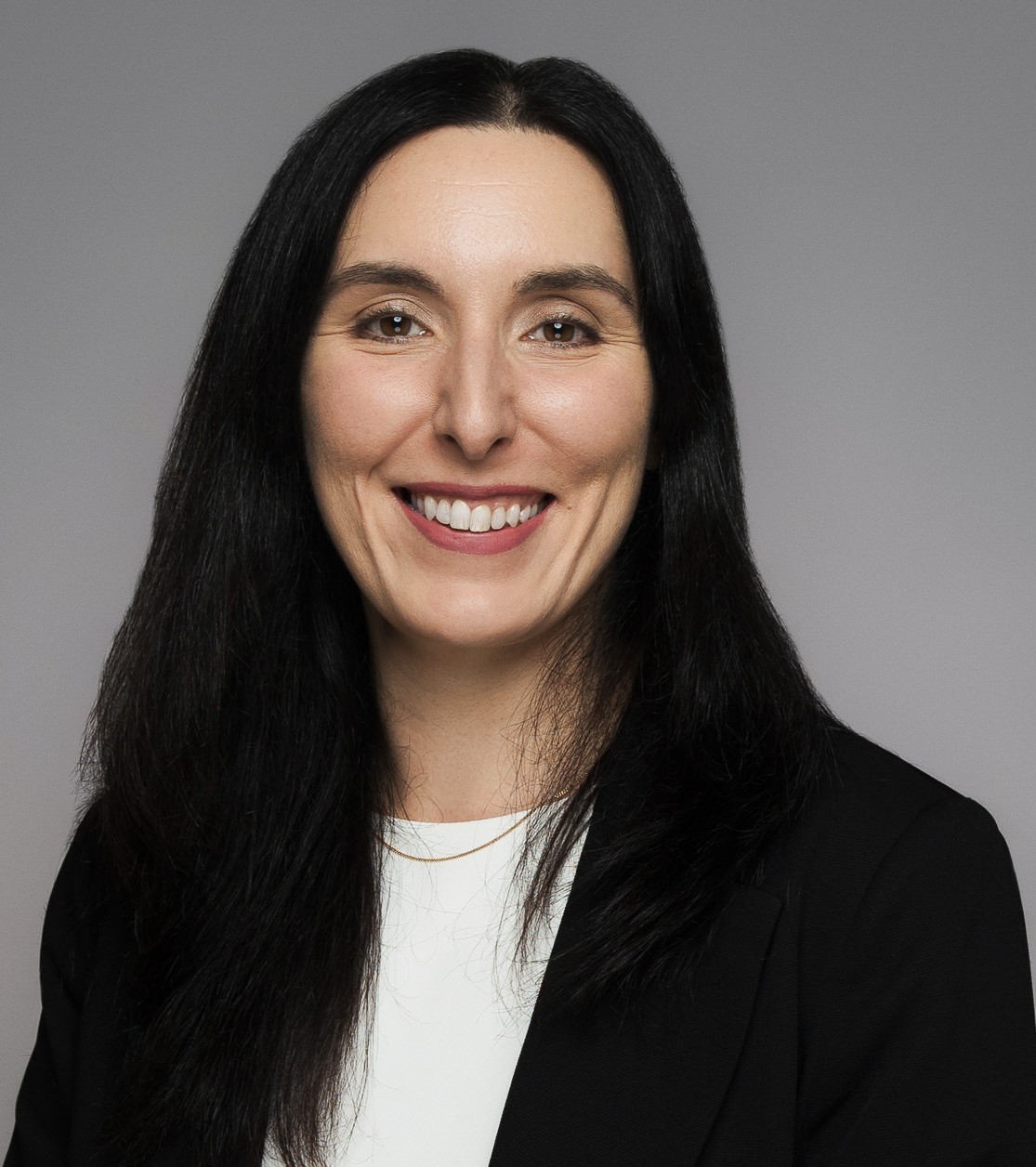
Aurélie Sheehan joined NAATI in 2018 to support the rollout of NAATI’s certification system. In her current role she leads NAATI’s work to develop and continuously improve that system, including examiner training, candidate support, test material creation and test design across specialist and non-specialist credentials. She is an AUSIT member, and has been a NAATI-certified English-to-French translator since 2010.
1. NAATI (2024). Translation and Interpreting technologies and their impact on the industry. Final report prepared by the Department of Linguistics, Faculty of Medicine, Health, and Human Sciences, Macquarie University, Sydney.
2. Wang, P (2026). Multilingual AI Masterclass. The Localization Institute.
3. KUDO. KUDO AI Speech Translator. KUDO.
4. Wang, P & Smith, P (2025). Multilingual Artificial Intelligence. Routledge.
5. Patruno, G. (2026, May). What gets lost when AI writes, and how to reclaim it. MultiLingual, 18–23.
6. Nimdzi (2026). The 2026 NIMDZI 100.