


RECENT RESEARCH
Researchers: Dr Marina Cavuoto, Simona Markusevska, Nyssa Clarke, Prof. Bianca Brijnath
Institution: The National Ageing Research Institute (NARI)
Funded by the Australian National Health and Medical Research Council’s Partnership scheme,* the Improving Interpreting for Dementia Assessments (MINDSET) study was designed to improve the quality of interpreter communication in cognitive assessments for dementia.
This work was undertaken because our** earlier research had found that interpreters are servicing increasing numbers of people with dementia, but have variable experience and knowledge about the condition; and that this results in inconsistencies in interpreting which reduce the validity of cognitive assessments, diminish clinician and patient satisfaction, and overburden health services. Subsequently, interpreters themselves recognised the need for specialist training in dementia.
Our solution was to work with interpreters, clinicians, and family carers of culturally and linguistically diverse (CALD) people with dementia, to codesign comprehensive, high-quality online training targeted at interpreters. The training was also user-tested by interpreters and further refined based on their feedback, to ensure it met their needs.
We then undertook an evaluation of the efficacy of the training on interpreter communication quality in a single-blind, parallel-group randomised clinical trial to understand whether the training worked. A total of 126 certified and provisionally certified interpreters of the languages most commonly spoken by older CALD Australians – Arabic, Cantonese, Greek, Italian, Mandarin and Vietnamese – completed the trial. The findings showed that the training resulted in improvements in interpreters’ knowledge of dementia, and in their and ability to brief and debrief. The effect was stronger for interpreters who completed more than 70% of the training; this group showed significant improvements in their interpreting for dementia assessments overall, as well as in knowledge of the condition, cross-cultural communication, and ability to brief and debrief. The findings suggest that the MINDSET training can lead to improvements in the interpreting skills needed to mediate cognitive assessments for dementia if at least 70% of the training is completed.
Following the trial, we conducted a national implementation of the training across Australia, making it freely available to all interpreters regardless of language, qualification or experience level. Over 12 months, from 24 November 2023 to 12 December 2024, 865 interpreters of 97 languages from all states and territories completed the training, with a high overall pass rate of 99%. This is approximately 14% of the active interpreter workforce in Australia.
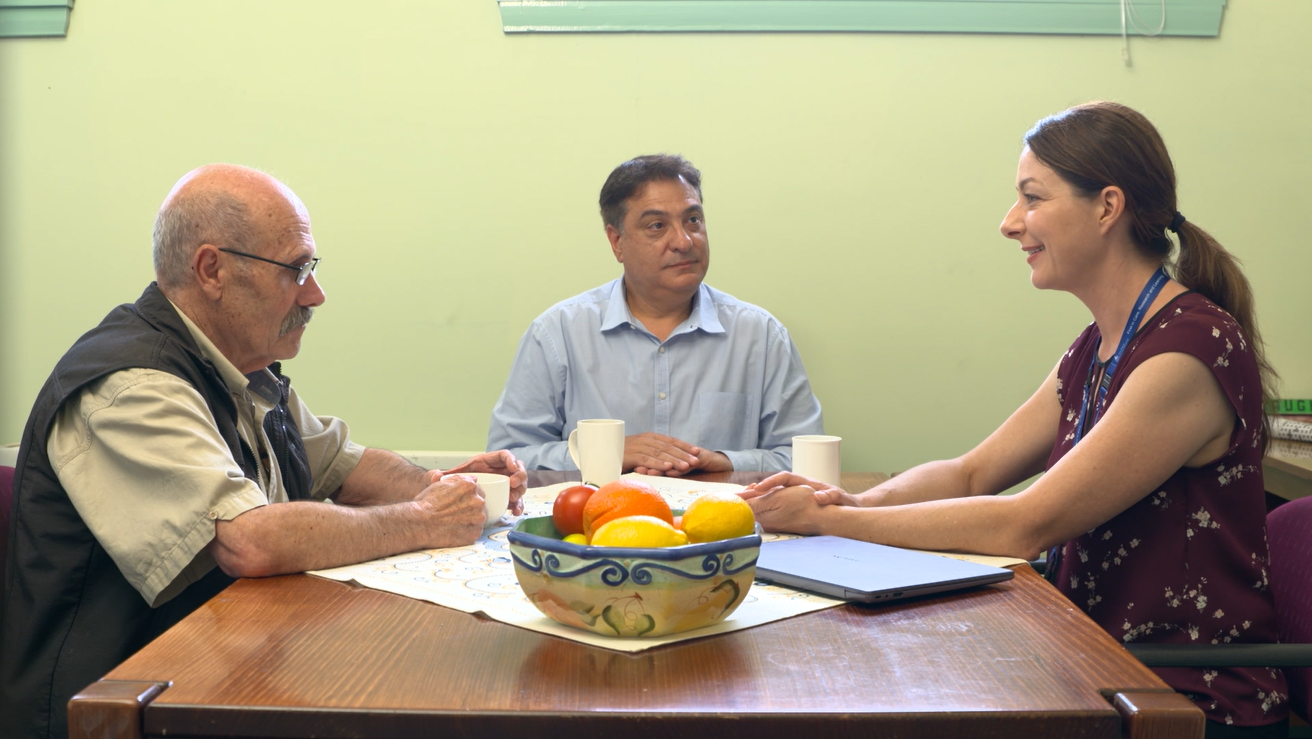
We would like to thank all the interpreters who participated in this study for their time and their contribution to improving dementia diagnosis for CALD Australians. Further information and links to our published articles can be found here.
The MINDSET training is now available on the NAATI website here, and includes useful training videos of cognitive assessments in the six languages included in the trial.
* This work was funded by the National Health and Medical Research Council (NHMRC) through the Partnership Projects Scheme, with partners including NAATI, Dementia Australia, AUSIT, the Migrant and Refugee Health Partnership, the NSW Health Care Interpreting Services, All Graduates Interpreting and Translation Services, Translating and Interpreting Service (TIS) National, and the Commonwealth Department of Health and Aged Care.*
** The MINDSET team includes Prof. Bianca Brijnath, Dr Marina Cavuoto, Simona Markusevska, Nyssa Clarke, A/Prof. Joanne Enticott, Dr Andrew Gilbert, A/Prof. Erika Gonzalez, Dr Jim Hlavac, Prof. Lee-Fay Low, A/Prof. Dina LoGiudice, Prof. Robyn Woodward-Kron, A/Prof. Josefine Antoniades, Dr Xiaoping Lin, Dr Kerry Hwang and Dr Jennifer White.