



Interviewed by Michele Miller
INTERVIEW SERIES
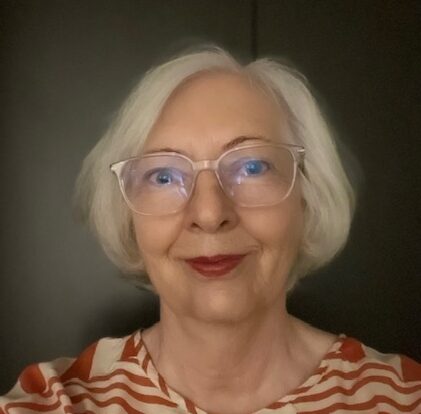
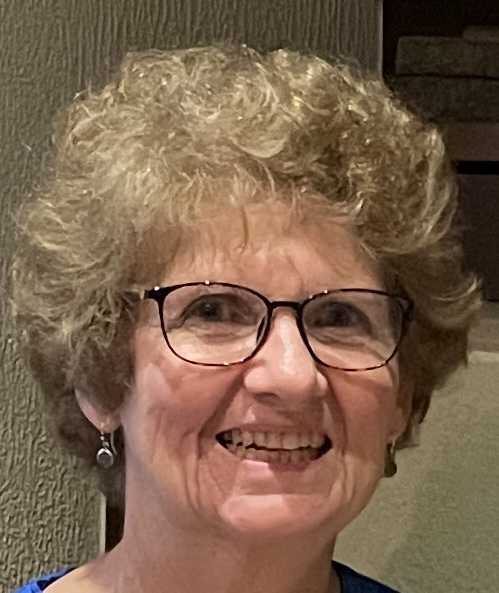
For our tenth interview in this series, AUSIT Fellow and past president Annamaria Arnall is interviewed by her friend and colleague Michele Miller.
Language professionals were respected and paid very well then, equal to or better than lawyers.
Michele: Annamaria, on behalf of AUSIT, I’d like to thank you for agreeing to this interview. It’s important to capture your story and your thoughts and special memories as a language professional, and to share these with our members.
Let’s start with when and where you were born, what education path you followed, and when and why you came to Australia?
Annamaria: I was born in Hungary, in a very old – over 2,500 years old – medium-sized town called Győr, which is halfway between Vienna and Budapest. The history of my birthplace made me realise that Hungarians are merely the latest custodians of that land previously peopled by Slavs, Romans, Celts and other tribes, one after another.
My father’s mother was born in Vienna, and he often spoke German with her. I heard Slovakian spoken on the streets, as the border was nearby. Russian language was a compulsory subject from fifth-grade primary. I studied French in high school, and excelled in it, yet I didn’t see my future career in languages.
Afer school I completed an intensive science and engineering course at the then Horticultural University of Budapest, which was aimed at training future agrobusiness managers.
Afterwards I moved to Poland, and given the enormous demand for translators and interpreters between Hungarian and Polish, I started to freelance in this field. When I first entered the profession, I had no formal training but was guided by generous mentors. I was fortunate to learn from the best.
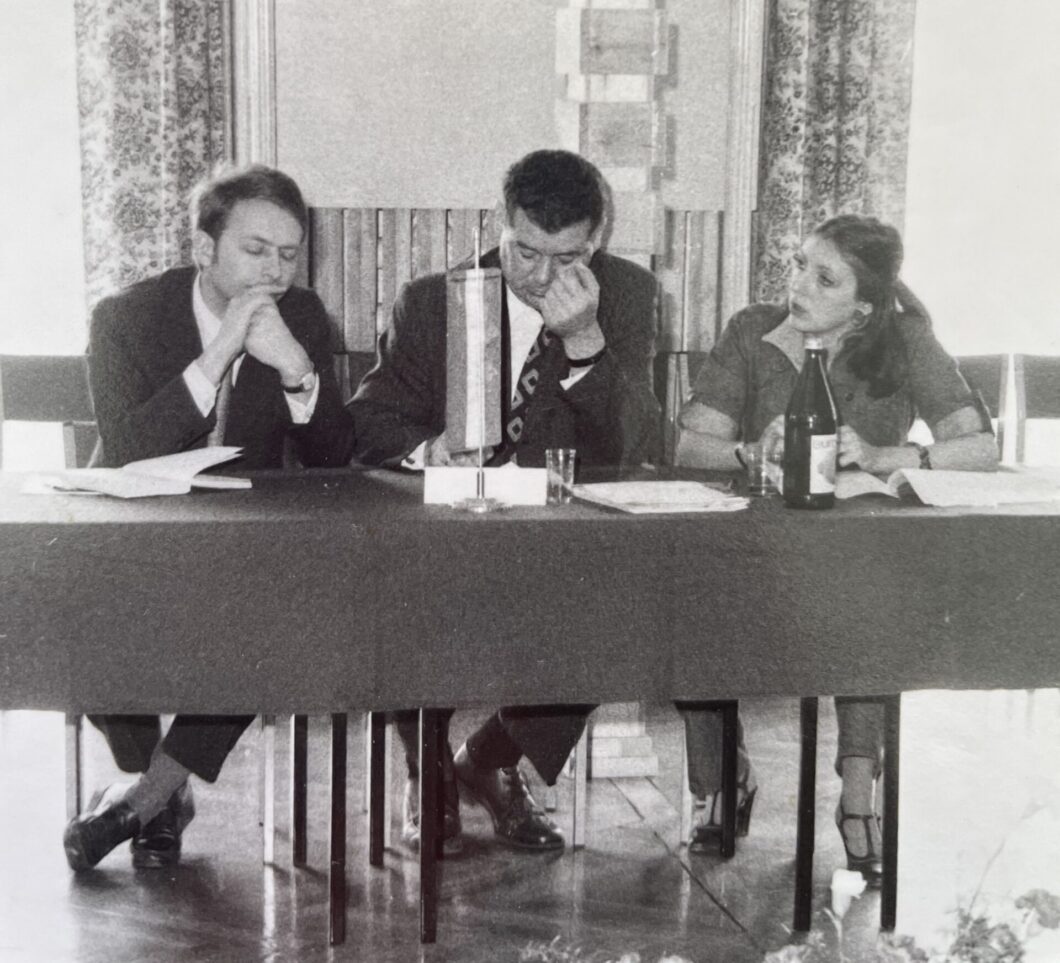
Above: Annamaria interpreting in chuchotage mode to Hungarian delegates at an international conference in Poznan, Poland in 1978
Language professionals were respected and paid very well then, equal to or better than lawyers. Being exposed to many languages, people in Europe appreciated the skill and art involved. Many were multilingual and knew the difference between merely speaking a language, and being able to translate or interpret it.
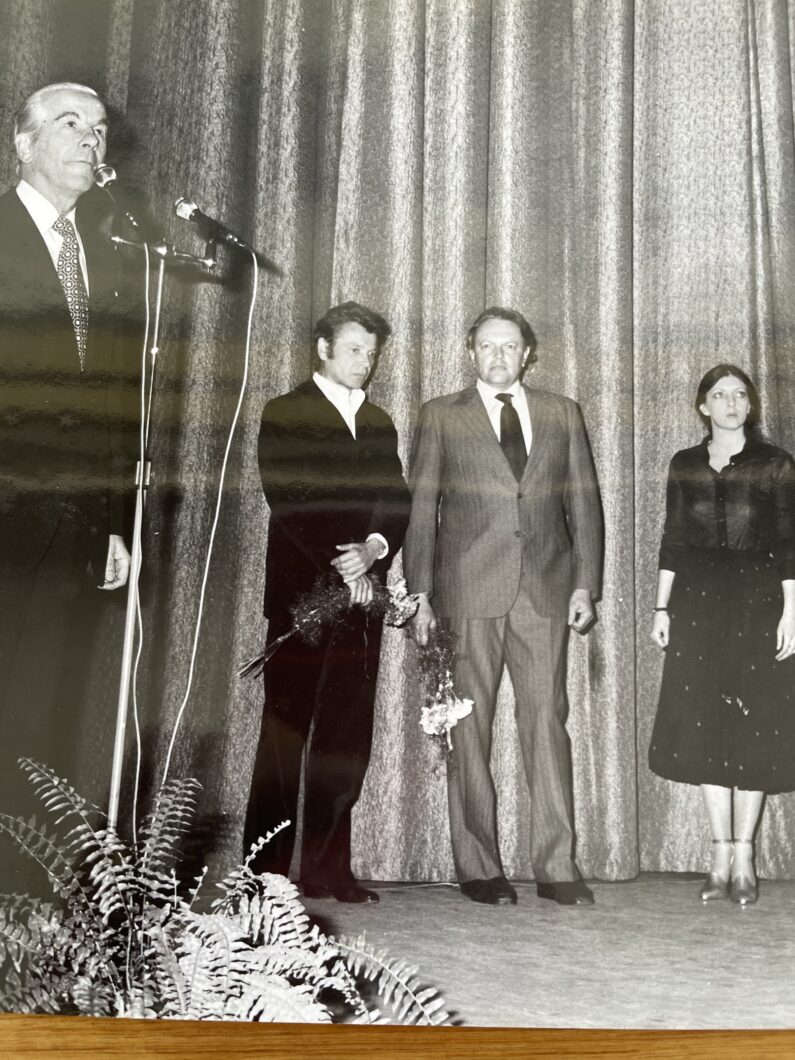
Above: On a Warsaw cinema stage at the launch of a movie by Hungarian director István Gál – most likely Cserepek, 1980, in which a Polish actor played the lead role. Annamaria interpreted the words of István Gál (second from left) to the audience.
I came to Australia in 1981 as a refugee from Poland, where the anti-socialist Solidarity movement was about to be quashed. As I was working for the media of the day and had knowledge of sensitive political details, I feared for my personal safety and escaped to Austria. I could have settled there, but the idea of multiculturalism, which was something new then and promoted in Australia, attracted me.
Michele: With such an enviable background in languages, how did you begin your career as a practitioner in Australia? For example, did you start with translation or interpreting qualifications or did you learn on the job?
Annamaria: The culture shock on arrival was unexpected and rather painful, but thanks to some kind neighbours and workplace colleagues who soon became new friends, it didn’t last long. My English was rather elementary on arrival, so I was looking for employment in which speaking well was not crucial, and became a laboratory assistant thanks to the Commonwealth Employment Service job-seek agency.
My CES interview was eventually helpful, yet so shocking! They asked me what my work was back home. I proudly replied, ‘Translator and interpreter’. ‘That’s very nice, my dear’ they remarked – in such a condescending tone, it profoundly wounded my ego. You see, only the year before I’d been accepted into a top Polish–Hungarian conference interpreting team, which was a pinnacle of achievement for me.
Because my languages and T&I skills were in demand by TIS – the Telephone Interpreting Service – back then, I soon became a contractor and continued my career as a practitioner in Australia. I also enrolled at the University of Western Australia, majoring in linguistics and anthropology.
Michele: I can certainly identify with that experience Annamaria. Starting as a technical translator in 1978, I remember how people’s eyes used to glaze over when I mentioned the words ‘Japanese’ and ‘translation’ together in the one sentence. Now, moving on, tell me how and when you first became involved with AUSIT?
Annamaria: I was a new mother working part time and studying part time; I didn’t have time to contribute to my profession. At first, I joined WAITI [the Western Australian Institute of Translators and Interpreters] but then let my membership lapse, so I was only very vaguely aware of the fact that a new national body was being formed.
It was in 2002 when I received a leaflet about a T&I conference taking place in Perth – vini, vidi, vici! AUSIT came to me, I saw it, and it won my heart! I joined then and there. By then I had more free time and was able to contribute.
In 2004 I was elected to the National Council as vice president, and served in various positions for about 10 years, including as president from 2011 to 2014.
Someone once asked me how was it that I ended up representing AUSIT, and I had to reply: because there was no-one else. I felt bad about hanging around for so long, ‘Why do we always see the same people?’ … but truly, at that time there was nobody else both willing and able. Over the years I stepped in at least twice to take on the presidency when the original office bearer had to resign for health reasons.
Having to not only carry the policy side of leading an organisation but also take care of the day-to-day management tasks demands enormous effort, which we can give freely for only so long. I felt I was fortunate that I was in a position to support AUSIT. I felt humbled and honoured when, in return, my peers awarded me the AUSIT Fellow title.
During my time on the National Council we finally established a paid secretariat to look after the routine practicalities. For a while we had a (poorly) paid professional executive officer whose expertise was instrumental to the success of the years to come. Even after his time, membership numbers continued to increase thanks to the measures he’d introduced, which enabled the organisation to engage more professional hands.
To me, learning new tricks of the trade and pondering theoretical nuances are just two of the obvious benefits.
Michele: Moving on to your professional practice, you’ve worked across translation, editing, website localisation, subtitling, and post-editing of machine translation. I am curious to know which area gave you the most work, and to maybe hear an example of a project that was especially challenging, or especially rewarding or fun?
Annamaria: Oh, Michele, it’s not easy to calculate, but if I measure the efforts by the hours spent on it across the decades, translation will claim first place. As to the area, well, it’s more difficult to calculate. I started translating technical articles as part of my job on graduating from the Horticultural Uni, and not much later I was also delivering pieces of literary translation as well. I dealt with a huge diversity of topics and genres, and each job came with its own peculiar challenges. And rewards. And the fun I had whilst dealing with the text. I love variety!
Michele: Did you do both certificate and text translation?
Annamaria: Yes, I did all the time and still do, albeit only a couple of hours in a typical working week. What’s more, most weeks are non-working weeks for me these days. I’m basically retired now.
Michele: Before we hear more about your life in retirement, can I ask if you’ve ever refused to undertake an assignment on the grounds of your own personal ethics?
Annamaria: Yes, I have. It was online correspondence between two people. I undertook work like that from lawyers or law enforcement agencies because they needed to investigate those private matters, but, in this case, the request came from a third party – another private individual. I could not engage in breaching the privacy of that correspondence just for the sake of someone’s apparent curiosity.
Michele: Have you often had to refer to the AUSIT Code of Ethics and Code of Conduct, and is there anything about these Codes that you would change?*
Annamaria: Yes, I often refer to it, and yes, I’d like to add two topics to the Code of Conduct, in connection with the principle of professional conduct.
The first refers to the use of MT and specifically of artificial intelligence, particularly in terms of the need to maintain privacy.
The second relates to certification. Members seem to believe that they can only certify a translation if it was prepared by them. I question this approach because I believe that by being a certified professional, I have the right to make a judgement on someone else’s translation. I’m an expert, if you will. Consequently, if I carefully assess – and maybe correct – a translation and eventually find it acceptable, I have the right to make a statement about this fact. I can certify that I’ve read this text, compared it with the original and found the translation to be complete and accurate. I’m happy to put my seal to a statement like that.
* Editor’s note: Annamaria was able to submit her ideas during the recent invitation for submissions by AUSIT’s Working Group for the Revision of the AUSIT Code of Ethics & Code of Conduct.
Michele: You were also a ‘cultural and linguistic advisor’. What did that involve in practice?
Annamaria: Your question about a particularly rewarding experience brought to mind a job I can describe as an example. An academic needed to access the content of very old hand-written Hungarian family correspondence in her work. Translating all the letters and postcards in longhand would have taken quite a long time, and the cost would have exceeded the available funds several times over. I suggested oral translation. We organised face-to-face work sessions, during which I read out each piece in English and she made notes of the content, the tone, or any other characteristic she found important. Translation was frequently suspended and the session augmented with explanations when a word or expression had to be put into a historical or cultural context to be fully understood.
Michele: Have you attended many conferences during your career, and how did you benefit from them?
Annamaria: Since that first conference in Perth in 2002, I attended all AUSIT conferences until 2019. I was in Berlin at the FIT Congress too, in 2014, when AUSIT narrowly won the right to organise the next congress for Brisbane 2017.
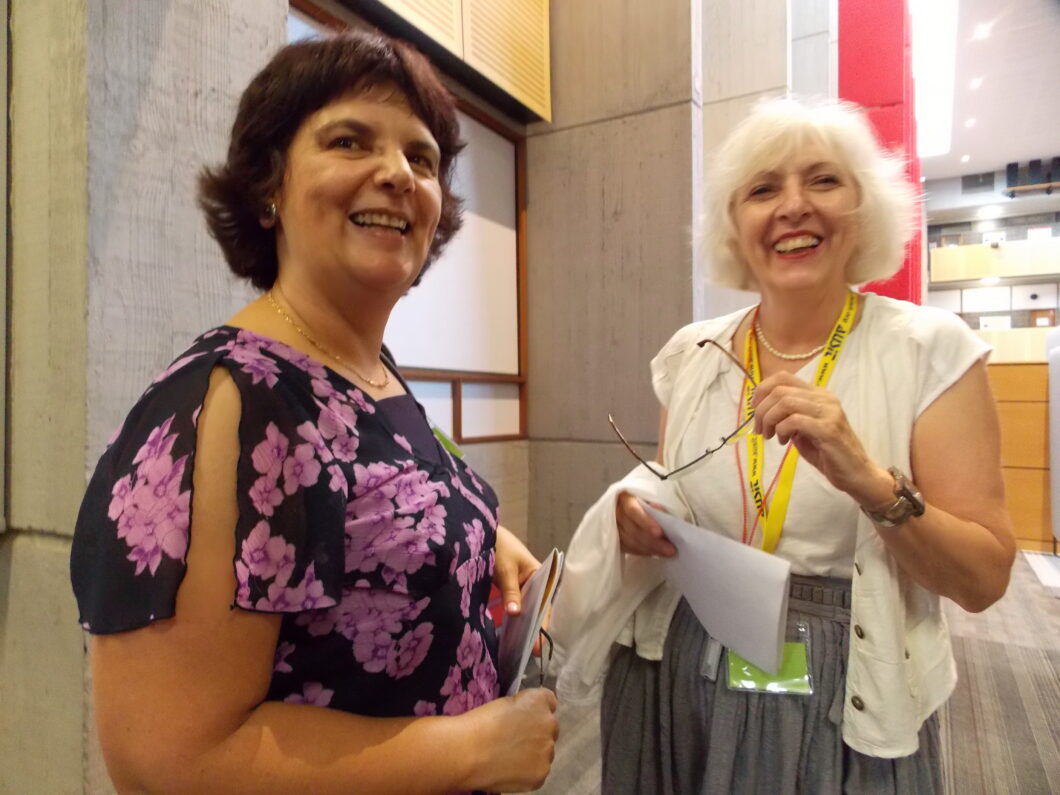
Annamaria (right) during the AUSIT Silver Jubilee National Conference ‘JubilaTIon 25’ held in Sydney, NSW in 2012, with (left) AUSIT Fellow Yveline Piller (national president when Annamaria became vice president)
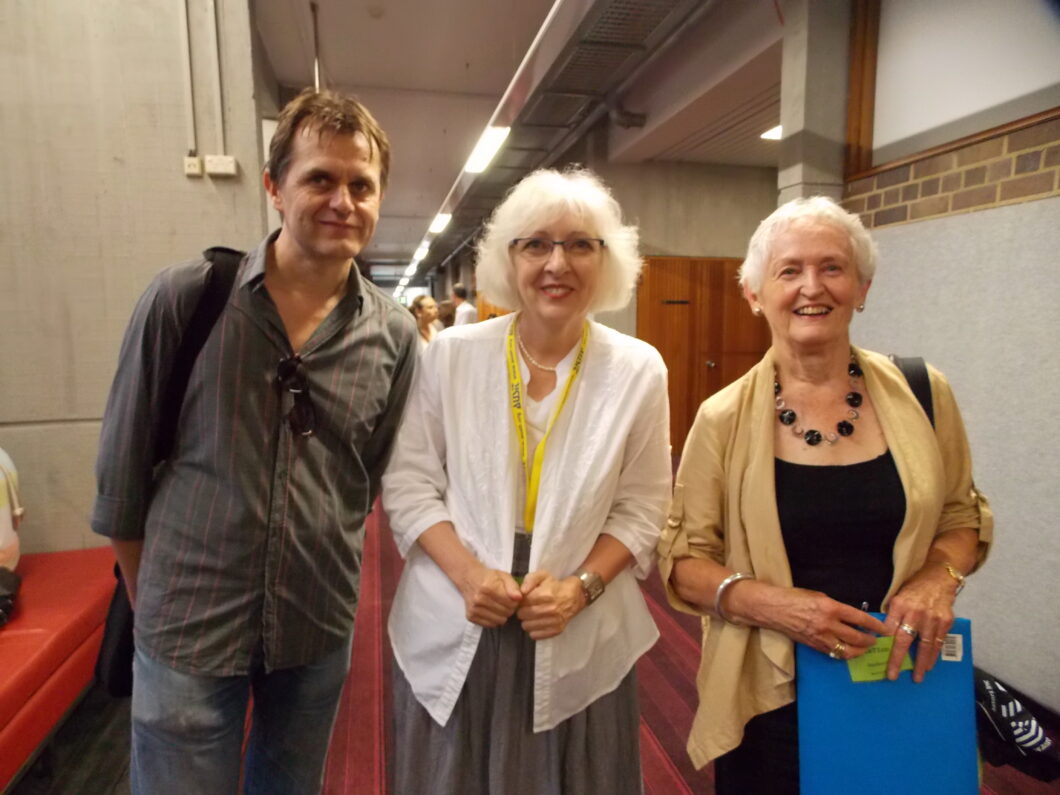
Annamaria (centre) during ‘JubilaTIon 25’ again, with (left) award-winning literary translator David Colmer, whose presentation attracted a huge audience, and past national secretary and AUSIT Fellow Barbara McGilvray
I very much enjoyed each and every conference, particularly those I helped to bring about as a member of the National Council.
To me, learning new tricks of the trade and pondering theoretical nuances are just two of the obvious benefits. We may enrich our knowledge online too, and from reading books and magazines; we don’t need to attend conferences for that. But we can’t really establish meaningful personal contacts unless we interact with our colleagues! Meeting so many of our peers in the foyers during the breaks and at the gala dinner, comparing notes, and exchanging some (mostly innocent) gossip all lead to a better understanding of the state of the profession. We can observe job market trends, and we can put faces to the names of those significant personalities and players in the T&I industry. The more clearly we see, the better are the chances to orient ourselves and present our skills. We can form professional alliances, gain mentors, get recommendations. Even just talking to people who understand us and our workplace joys and frustrations is precious.
Michele:
Do you participate in International Translation Day events, and do you think ITD has made a difference to our profession – as opposed to, say, how International Women’s Day provides a platform for celebrating the social, economic, cultural and political achievements of women and raises awareness of issues such as gender inequality and pay gaps?
Annamaria: What an excellent question! Unfortunately, I don’t think ITD makes a visible difference. Though, the comparison is imbalanced. Women, as 50 % of the community, comprise all sorts of talents, effective marketers, media personalities, celebs and influencers among them, so both in terms of the scale and the punching power, T/Is are at a disadvantage. I wish we, as a profession, were more creative, outgoing, boisterous!
The potential is there in these celebrations, and the profession should be grabbing the headlines, but it’s not happening. Maybe because most of us are people who prefer standing beside our clients or back in the shadows, or even better, pounding away at our keyboards and being true to other people’s words.
Michele: I’m sure there are many who would agree with you. Now, looking back, what have been the most significant changes you’ve seen during your career?
Annamaria: The rapid growth of technology. I started on a portable typewriter and for some select jobs, I used to hire a typist to produce a clear final copy. Being a typist was once a job in its own right, back before everyone could access their own computer and use their own keyboard. I recall the awe I felt when I sat down in front of our Apple II for the first time, around 1990. And, oh, what a joy it was when I first accessed an online dictionary!
Later I observed with interest the emergence of computer-assisted translation tools and worked with Wordfast and Trados. I found I would use them only for technical texts that involved many repetitions – user manuals come to mind – but then I began moving away from jobs of that type and no longer needed these tools.
I instead started to do translation jobs for agencies directly on their online platforms. I liked that quite a lot. These days I use AI for the occasional segment with special terminology or overly complicated sentence structures, but I found I need to check the output for hallucination or misunderstanding.
Michele: In that connection, what do you think of the 2024 Microsoft study (not yet peer reviewed) that places translation and interpreting at the very top of a list of occupations most likely to be impacted by LLMs in terms of AI applicability (meaning a measure of their crossover with AI and how well AI’s current abilities support T&I tasks)?
Annamaria: I can only agree and suggest that AI is less a job-killer and more a powerful new tool. Those who master and incorporate AI into their workflow will increase their productivity and efficiency. Artificial intelligence is built and designed by people. Its output must be checked and verified by people. If a translator or interpreter feels they are becoming redundant, I would encourage them to focus more on specialisation, diversification and marketing. Look, we still have painters and graphic artists among us despite the invention and general availability of photography.
Michele: You’ve been a translator and interpreter working with the Hungarian and Polish languages throughout your working life. You have served on various AUSIT committees with state, national and international involvement for nearly two decades. What has been the most rewarding aspect of observing the successes of the new generation of T&I professionals?
Annamaria: I recalled at the beginning of our conversation the condescending attitude of the employment agency officer when I told him I was a translator and interpreter. Later, when I learned some more Australian history, I understood the reasons. Back then, translation and interpreting was not recognised as a profession by the average monolingual citizen of Oz. Everybody was meant to know English; if you were a newcomer, you were expected to learn it instantly. If you were a bit slow to acquire a new language, your children acted as interpreters or if unavailable, the nurse in the hospital asked the Yugoslav kitchenhand to help out because she spoke ‘foreign’.
Thankfully, training of language professionals commenced in the ’70s, but it took long decades before the public at large started to appreciate what is involved. Considering the available resources and the need in so many languages, it is little wonder. The kind of regulations that provided safeguards in most other sectors proved impossible for many reasons. The current NAATI credentialling system emerged as a workable solution after many years of difficult trials and controversies. Lifelong learning may not be universally popular just yet, but ever more affordable access to ever more relevant professional development brings benefits not only to translators and interpreters, but the entire community. Today, when all practical aspects of multiculturalism are so commonly experienced by society in general, I think the profession is much better respected. This is an achievement that I attribute in no small measure to the new generation of professionals. After receiving excellent training, whether at university, or – for languages of lesser distribution – from the agencies that employ them, the work by which my colleagues contribute to overcome language barriers makes me so very proud to be a translator in Australia today.
Michele: After such a rewarding career, how are you spending your retirement?
Annamaria: My family has increased and I’m lucky enough to be close to my grandchildren and spend many joy-filled hours with them. I’m also busy writing down the history of their ancestry. The genealogical research involved in this undertaking fascinates me with never-ending discoveries.
Michele: That’s excellent to hear Annamaria. We thank you for your contribution to AUSIT and to the world of T&I, and wish you many happy years in retirement.
Do you know a longstanding AUSIT member who has made significant contributions to AUSIT and/or the T&I profession? Would you like to interview them for this series? Just get ‘in touch’ with one of our editors or an Editorial Committee member (see page 2), and we’ll take it from there.