


Interviewed by Nancy Guevara
When AUSIT past president Sam Berner (2009–10) agreed to participate in this series, we asked if she could think of a suitable interviewer. Sam suggested the QLD Branch’s current PD Coordinator Nancy Guevara, and she chose well – Nancy took an extremely creative approach to the process, and we hope you enjoy reading it as much as we enjoyed editing it.
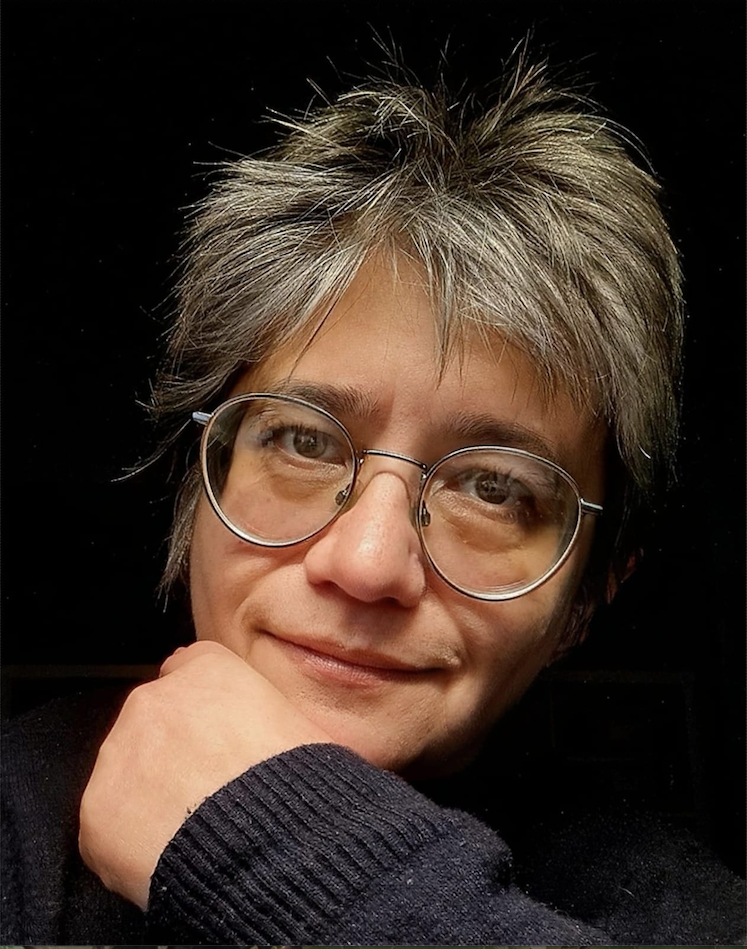
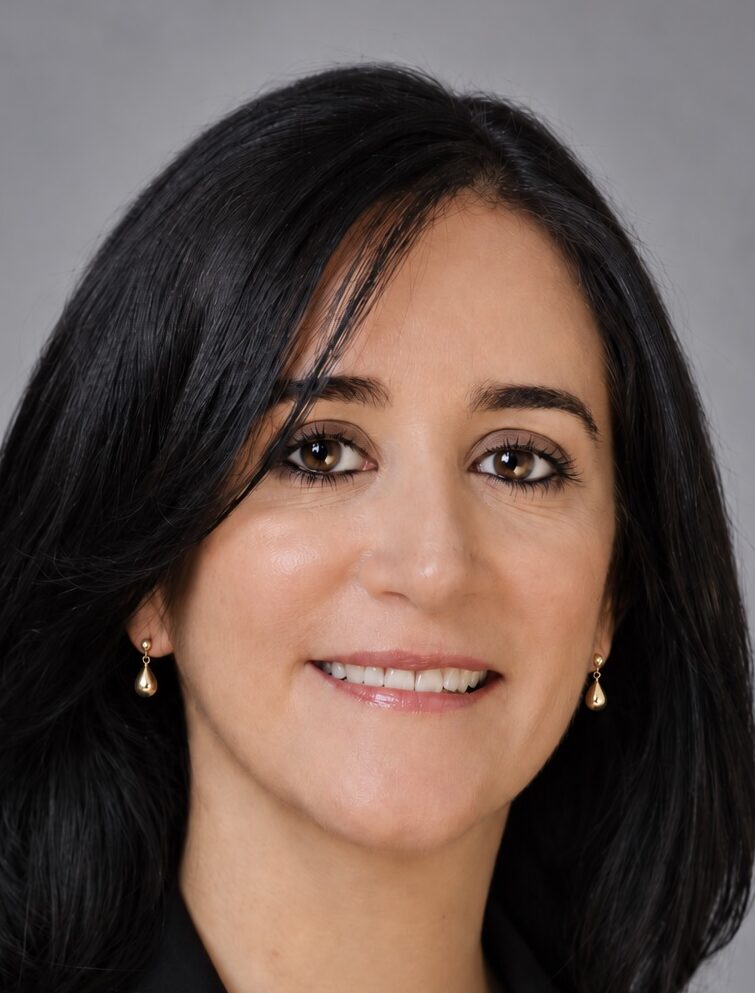
… I was six when I figured out I couldn’t speak the language of the country in which I was living …
Just Sam in front of her audience. No slides, no carefully designed presentation deck, no elaborate visuals. Just Sam, her handwritten notebook, and her characteristic way of speaking: thoughtful, candid, engaging and unmistakably her own.
That presentation – two years ago, at a mini conference organised by the QLD Branch – stayed with me long after the day was over. There was something especially powerful about its simplicity. Without slides or visual distractions, the focus was entirely on Sam’s words and the experiences behind them. And so much of what she spoke about resonated with me personally: migration, language, identity, belonging, and the complex relationship we develop with the languages that become part of our lives.
At the start of her presentation, Sam read out a poem she had written about language and identity. It had such an impact on me that the next day I contacted her and asked whether she would share a photograph of the handwritten poem with me. She did, and I kept it.
So, when I was invited to interview Sam, I thought of that poem. Rather than simply give a chronological account of an impressive professional career, I wanted to return to the words that had first given me such a personal glimpse into the person behind the practitioner.
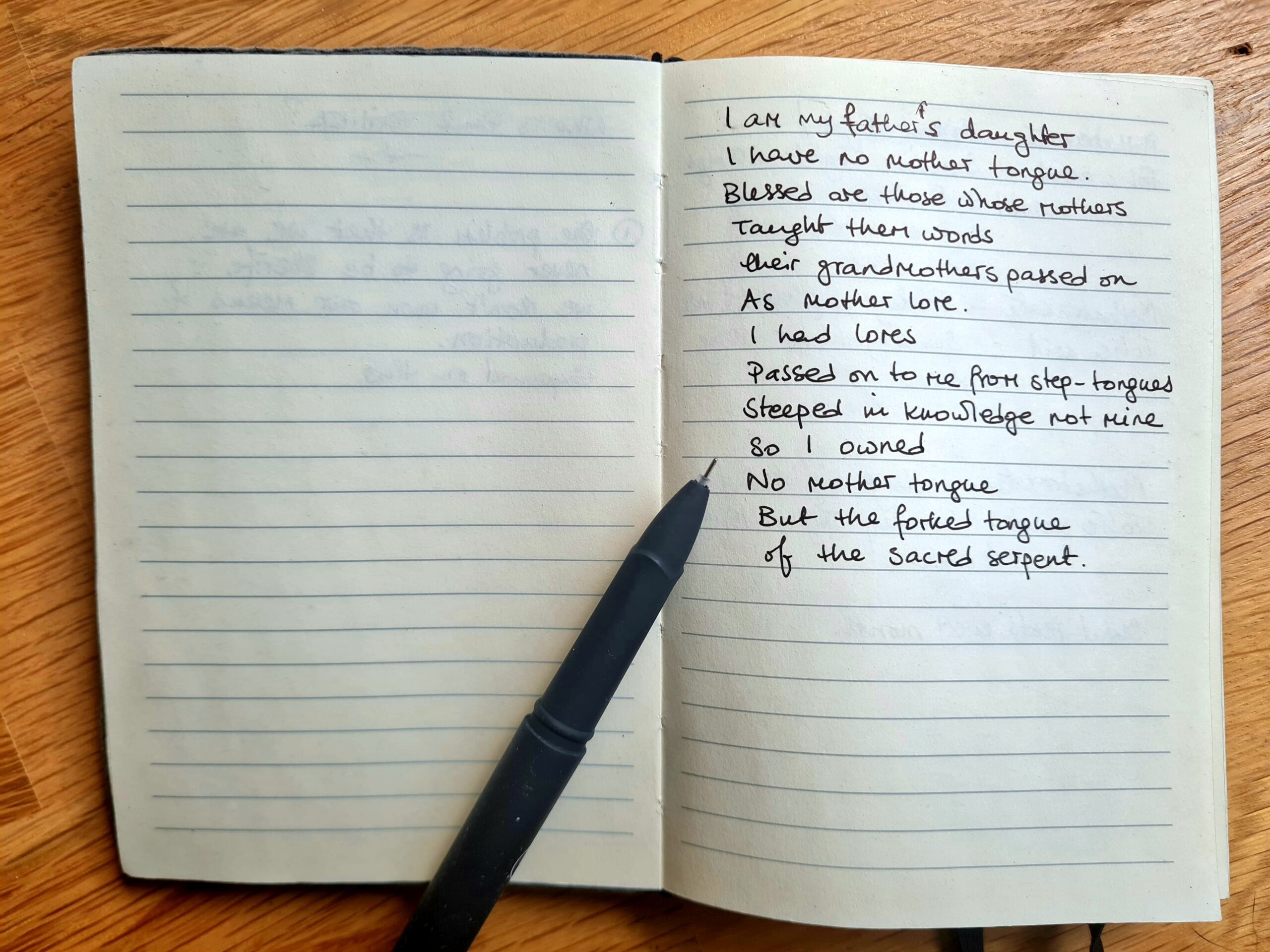
With Sam’s permission, I used her poem as a thread running through our conversation. Its lines became a way of exploring her journey through languages, places and identities, as well as her relationship with translation, interpreting and the profession to which she has contributed so much over the years. And so, our conversation began with the poem itself:
Nancy: First of all, Sam, thank you for choosing me to conduct this interview. It’s an honour.
Sam: My pleasure.
Nancy: Let’s dive straight in, and thank you for agreeing to using your insightful poem. What made you write it?
Sam: Uh, it was a bit tongue in cheek, with a bit of sarcasm. Everybody was talking about mother tongues, and I was thinking, ‘What’s the definition?’ But also with bittersweetness, because I didn’t grow up with something I could call my language.
Then my co-presenter Nasim Khosravi was talking about how difficult it was to write a theatre play in English for an English audience, which she’d done all the time in Farsi back in Iran, and she was sort of – through her work – trying to translate Iran for an Australian audience. And I thought, ‘Yeah, that resonates, because all my life I’ve been translating myself to others.’ That’s why I wrote the poem during her talk.
Nancy: Oh yes, I remember that presentation well – so you actually wrote it at the mini conference. Amazing! Now … let’s read out the first two lines:
I am my father’s daughter
I have no mother tongue.
Nancy: These opening lines seem to take us right back to the origins of your story. Where did your journey with language and identity begin?
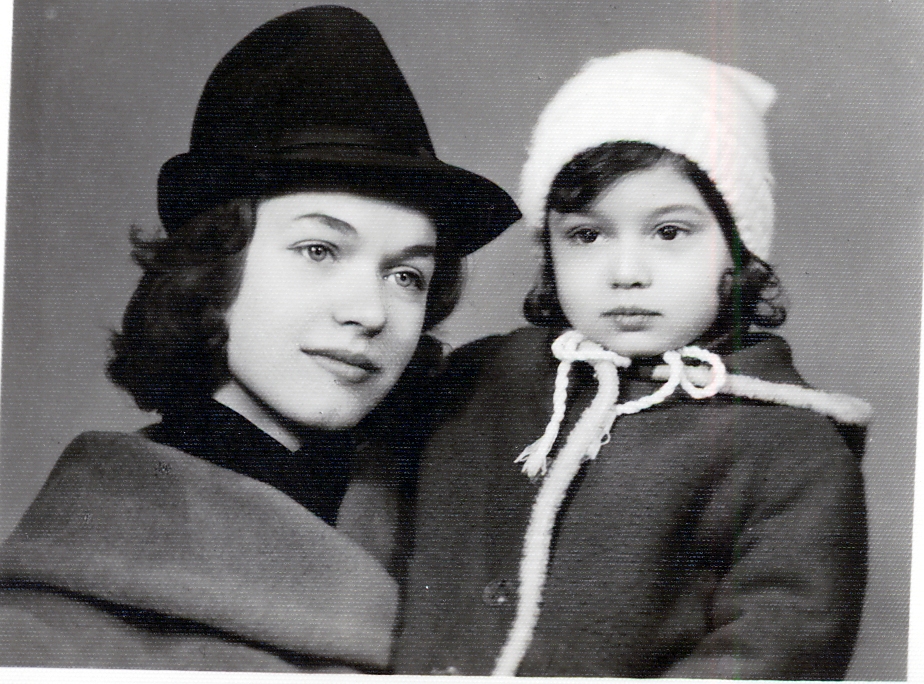
Sam: I think I was six when I figured out that I couldn’t speak the language of the country in which I was living. I was born in Poland and spent my first six years there, and I learned to read Polish when I was about three and a half.
And in the house … I wasn’t consciously aware of it at the time, but my mother and grandmother spoke a different language to the one they spoke with me, and my father spoke in another language. It seemed natural to me then, but thinking about it now, I was exposed very early on to a multiplicity of languages, some of which I owned and some of which I didn’t.
I was mainly brought up by my dad. Mom was absent for most of my life, so I identified as my dad’s daughter, not as my mother’s. And the language which both my grandmother and my mother spoke to me, Polish, was not their native language – to my mom it was half native, because her father was Polish, but I don’t have a ‘mother tongue’ because my mom spoke to me in a language that wasn’t her mother tongue – it was her father’s language, but not her mother’s.
Nancy: Sam, where did your parents come from?
Sam: Both my parents’ families were a mixture of various ethnicities, so they came from many places.
Nancy: Hmm, interesting. Let’s move on to the next four lines of your poem.
Blessed are those whose mothers
taught them words
their grandmothers passed on
As mother lore.
Nancy: These lines speak of language and knowledge being passed from one generation to the next. What do you remember being passed down through your family in words, traditions, values, or ways of seeing the world?
Sam: So … very, very young … my grand-mother reading to me. Most of the literature she read to me was not Polish … there were many German and Italian stories that were translated into Polish. Then once I got to school I discovered there was Polish literature, too.
My father’s side mainly passed on Arabic literature. And at home, it was my father’s family who taught me religion, my mother’s family were not practising. And values … I got some very strong values from my father’s family, which we’ll reflect on when we talk about my involvement in AUSIT
… it’s very important to get exposed to many cultures, even if you’re monolingual …
Nancy: I’d like to touch again on your ways of seeing the world. You’ve spoken about your upbringing and early experiences, and your love for reading, and how you started reading at a very young age … how has the variety of cultural backgrounds you grew up in and inherited from your parents shaped how you see the world, and influenced the person you’ve become, and how you’ve approached your work as a translator?
Sam: Well, I don’t think my upbringing had a lot to do with becoming a translator – that was a coincidence that grew into a career – but it made me very cosmopolitan, I study cultures. I’m very good at fitting into every culture, but not belonging anywhere … I’m a sort of footloose person who belongs nowhere but fits everywhere.
And books are an upbringing of their own … you can travel the whole world and see everything, but books are travel in a different way. Both sides of my family are avid readers. It was a ritual of passage in my father’s family, that when a child turned 12, my grandfather would give them the key to the library. It was something everybody looked forward to.
Nancy: Oh, wow! That’s so special!
Sam: Yes, this is how I grew up … in books. I’m very shortsighted. I’m totally sports-useless. So books were a haven for a child that couldn’t go out and play without tripping over or being hit by a ball or whatever, because she couldn’t see where she was going.
Nancy: So books really became your world. Now, the next two lines of your poem are:
I had lores
passed on to me from step-tongues.
Nancy: So I wonder … did the different cultures, languages and places you encountered become those lores, each giving you a different way of understanding the world?
Sam: Maybe not different ways – I understand the world my way, but I also understand how other people understand the world through their lores, and being exposed to different lores taught me how to respect and understand the perceptions of others.
I’m very postmodern – I’m not a believer in truth with a capital T. I think respecting and giving value to other people’s truths is important, and the world would probably be a much better place if we all practised this, instead of fighting over truth with a capital T.
Yeah, it’s very important to get exposed to many cultures, even if you’re monolingual – by reading, by exploring other people’s literature, their religions, their sets of beliefs and traditions. This made me a better translator, because I developed a better ear for the audience.
Nancy: Absolutely. It helps you avoid something I find quite tricky, both professionally and personally, and that is making assumptions. I think that can be particularly dangerous in our work. Now let’s move on to the next line, which reads:
Steeped in knowledge not mine.
Nancy: By the time you entered the profession in 1984, you’d already lived across different languages and cultures. How did that shape the translator you became? And what do you think a translator needs, beyond lingusitic expertise?
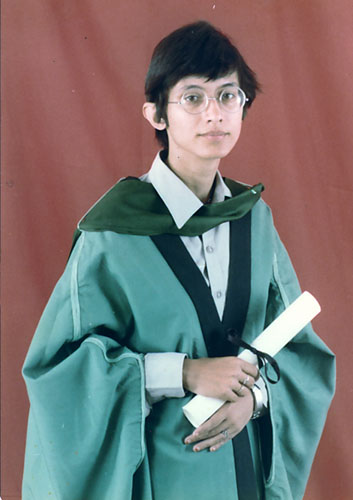
Sam: The translator needs knowledge. The more you know, the better translator you are. I think the fact that I grew up on books and exposed to different ideas, different cosmologies, different mythologies, different political views … by the age of 14, I was surrounded by adults talking about much more intense things than I should have been exposed to at that age. But growing up so fast made me a very good translator by the age of 24. I wasn’t prepared to become a translator, and starting with a book on Marxist philosophy was – you know – nobody sane does that. But I’ve never been sane anyway, so …
Nancy: Hahaha!
Sam: The translator also needs to have empathy. If you can’t empathise with your audience, how are you going to talk to them? Translation isn’t just transfer of words and meanings, it’s also transfer of the feelings in the text, so you need empathy. Of course you need tons of other things, like business and negotiation skills, but I’m not going to talk about this because this isn’t what this interview is about.
I think a good translator must also be curious. Curiosity is a very important aspect of a good translator or interpreter, to love languages you need to be curious. And continually learning, because language is a living creature, it doesn’t stop changing, so if you get stuck in a certain age of a language, you’re out of touch.
Nancy: It’s interesting you mention empathy. Normally we see those human ‘soft skills’ as more important for interpreters …
Sam: A translator is a writer. True, we don’t write our own words, but … can you imagine a novelist who doesn’t have empathy, and therefore writes extremely dry, inhuman texts? You need to understand other humans to be able to write a good novel, and it’s the same with translators … look, I’m a consequentialist, so every time I translate a text, I think about the consequences of it being read. If you don’t have empathy, how are you going to imagine how other people will feel, or how they’ll react to things you’ve translated? I think that’s ethically very important too.
Nancy: Absolutely. Now, Sam, let’s move on to the next lines in your poem:
So I owned
No mother tongue
Nancy: By this point in the poem, you’ve evoked a life shaped by many languages and cultures. Did having so many make it harder to feel that any one language, culture or identity was completely yours? We’ve touched on this, but please tell me more.
Sam: When I was younger I did want to have an identity … now that I’m approaching my seventies, funny as it sounds, I’m much more comfortable in my own skin than I was.
Do I own any of them? I’m going to give the question back to you here – should anybody own anything in the first place? Aren’t we all just visitors passing by? And the languages and cultures just host us, we learn from them and then we pass on and we go and learn something else. Maybe for me it was easier because I was so exposed to different things, but not belonging still hurts. But people ask, ‘Where’s home?’ and I say, ‘Where my books are.’ I’m a cosmopolitan nomad, culturally speaking.
Nancy: How did that sense of being between languages, places, cultures and different influences, and even all the knowledge you’ve been acquiring with your thirst for books and learning – influenced the professional identity you developed as a translator?
Sam: I think it made me more effective in terms of transfer of meaning. And I don’t think I would’ve found a better career than being a translator, because all my life has been translation – translating myself for others, my identity, explaining who I am, trying to translate cultures, being in wrong cultures – cultures that didn’t want to host me if I’d told them the story I told you.
So all my life has been about translating. And the translator is a bit of a con artist, by the way, in that you’re perpetually ‘conning’ with texts that are not yours. But yeah, I think all this exposure to other cultures made me a much more effective translator.
Nancy: Mmm, I can relate to how you describe translating yourself to the world, because after many years living in this country, I’m not able to leave my old self behind and assume just one identity. I don’t belong to either anymore – not fully from here and not fully from there. I’m talking about, you know, identity, not integrating into society – I’m very happy here, and happy with the contribution I’m making to Australian society – it’s the identity aspect.
Sometimes I feel I’m also trying to translate an internal dialogue, almost translating my new self to my old self. I find myself asking, ‘Why is this bothering me?’ There are simple, culturally shaped behaviours that I still struggle with, or things I still miss, so there’s this constant internal dialogue about who I am and where I belong. Now, the final two lines of your amazing poem:
But the forked tongue
of the sacred serpent.
Nancy: I’ve tried to work out what you mean here. A forked tongue can evoke contradiction or a divided identity, while the serpent can suggest knowledge and transformation. Is that what you wanted to say by closing your poem this way? No single language or identity seems to be able to contain the whole of who you are. Has living between languages and cultures ultimately felt like a loss, or a gift? Or simply part of how you’ve come to understand yourself?
Sam: Hmm, definitely not a loss. I’m enriched by what I’ve learned – and still learn – about other cultures. I have friends in most parts of the world – I’m not just interested in whatever 12 backgrounds my DNA comes from. The forked tongue can be a bilingual person. The serpent can also be perceived as a traitor, while the popular Italian proverb ‘traduttore, traditore’ (‘translator, traitor’) refers to how tough it is to reproduce a text’s original meaning.
But in Jewish cosmology the serpent has a very important role, and in feminist explanations of Judaism it’s actually an empowerer, and it’s an animal that’s wise – ‘Be as wise as serpents and as gentle as doves,’ as the rabbis say. So for me, the serpent is the owner of knowledge with a forked tongue, which could speak in more than one language.
The snake has multiple identities, and changes its skin. Some myths say snakes never die. They do die, but that constant renewal – I felt that was happening to me, I was constantly being renewed by learning new things. Yes, I don’t have a mother tongue, but I have a forked tongue and I have the wisdom that I’ve acquired, and that keeps my brain eternally young.
… if you see something wrong you should fix it, and there are three ways to do this: …
Nancy: What a powerful way to end your poem, Sam. So, has everything that you’ve shared – about your upbringing, exposure to different languages and feelings about your own identity – shaped how you’ve connected with the profession as a whole, and particularly with our association, AUSIT, and your colleagues there? You’ve contributed so much in so many different capacities over the years, and I always wonder what’s kept you coming back, giving to the professional community you belong to?
Sam: Well, I feel at home at AUSIT because everybody else is a serpent with a forked tongue, too – it’s a very colourful snake collection. I’ve made so many friendships there, they’ve taken the place of an extended family.
And why do I keep coming back? Well, I’m a sucker for punishment, obviously – that’s the tongue-in-cheek response. But it’s also because the values I grew up with were – ‘You own, you give.’ That was highly stressed in my family – that if you have something you can share, you share it. Otherwise, that thing has no value. I believe that if you have knowledge and you just keep it to yourself, it’s not knowledge. So I keep coming back. In AUSIT, I mostly mentor and teach. So, yeah, that value of giving is what keeps taking me back. And, something I’ve learned from my Arab Muslim friends, there’s a Sunnah – a prophet’s saying – that if you see something wrong you should fix it, and there are three ways to do this: with your hand, or with your mouth – you talk about it – or with your heart, which means you pray to God to do something, and that’s the least you can do. So, for me, that’s a massively important value.
Nancy: Sam, remind me, how long have you been in AUSIT? How many roles have you had? Have you been president?
Sam: Since 2003 – 23 years. I was president for one year, yes, and I’ve been on the Queensland Committee forever … since 2003. In 2004 I became the PD coordinator, then sort of navigated into the chair position. Then 2008, I organised the first Queensland conference, at UQ. Then 2014, the next conference, and 2022, the third that I organised. Plus in 2017, the FIT National Congress. Yeah, I’ve played lots of different roles.
Nancy: The contribution you’ve made to the association is incredible, I want to thank you for all the work you’ve done.
Sam: It was a fun ride. I enjoyed it.
Nancy: Mm, sometimes I wonder why I devote so many hours to the PD Coordinator role. Of course, we have an amazing committee who all help, but sometimes I think maybe I should stop. But I can’t – not yet. I really enjoy it.
Sam: That’s what ‘sucker for punishment’ means. It’s addictive.
Nancy: Yes, it’s crazy how addictive it can be, the incredible satisfaction you feel when you’re giving back to your colleagues and your profession, and somehow making a difference to the industry.
Sam: And karma, I believe in karma, and I have to say that ever since I put my foot in AUSIT, that karma has been repaid in many ways. The most valuable was getting to meet fascinating people, but it also helped professionally.
Nancy: Yeah, yeah. So we’re reaching the end of our interview, and I have one last question. Your poem starts with words passed down from grandmothers to mothers, then to their children – and in your case, from your father and grandmothers. You’ve spent so many decades teaching and mentoring and contributing to not only AUSIT, but the profession as a whole. What do you hope you’ve passed on to T&I practitioners who have come after you, and those still to come?
Sam: I can only judge my impact by the number of people who show up to my lectures – usually a full room. But I hope I’ve passed on the fighting spirit, and the critical thinking – don’t take anything lying down as a professional. Your self-respect will affect how others see you. I hoped I’ve passed that on, that you don’t have to be a wilting lily. It’s a very feminised profession and women, by default, are already oppressed just because of their gender. So – empowering women to stand for themselves, and showing them by example that it can be done – I think I’ve passed that on.
I’m very concerned about the younger, new translators. The world is changing at a speed that even I cannot fathom, and I’m struggling with that, trying to figure it out. So much of what I’ve taught so far is irrelevant now, I need to teach something else. But I’ll get there, I haven’t given up. You know, as long as I can talk, I’ll be presenting.
Nancy: Sam, it’s been wonderful spending this time with you. Thank you so much for answering my questions, and for embracing this creative approach to the interview.
Do you know a longstanding AUSIT member who has made significant contributions to AUSIT and/or the T&I profession? Would you like to interview them for this series? Just get ‘in touch’ with one of our editors or an Editorial Committee member (see page 2), and we’ll take it from there.
Advertisement: