




AUSIT NEWS
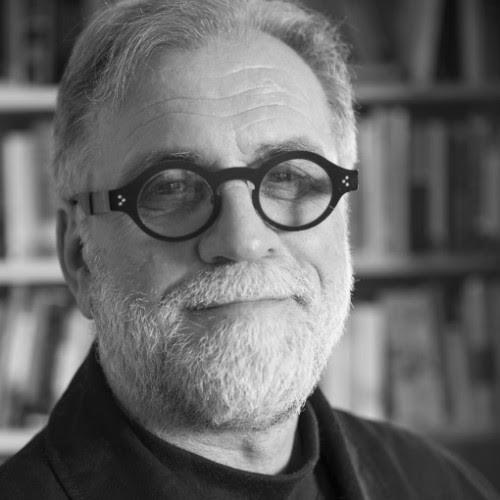
AUSIT’s eighth National President (2000–02), Moreno Giovannoni, was awarded the inaugural Deborah Cass Prize for his first work of fiction, The Fireflies of Autumn (2018).* This year his novel The Immigrants (2026) has been awarded two literary prizes and shortlisted for two more. In Touch asked Moreno to tell us about his writing and his inspiration.
* You can read Annamaria Arnall’s 2018 interview with Moreno about The Fireflies of Autumn here.
The epigraph for Moreno’s The Fireflies … is: ‘Migrants never arrive at their destination.’
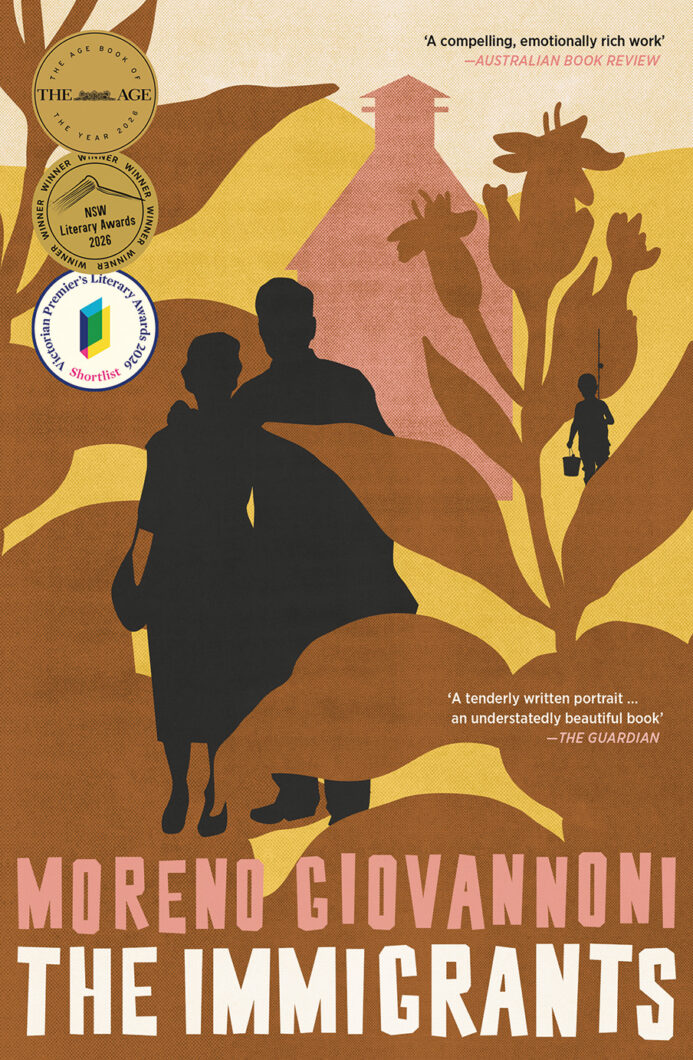
To date The Immigrants: Fabula Mirabilis, Or a Wonderful Story has been awarded the 2026 Age Book of the Year Awards Fiction Prize and the 2026 NSW Premier’s Literary Awards Christina Stead Prize for Fiction and also shortlisted for the Prime Minister’s Literary Awards 2026 and the Victorian Premier’s Literary Award for Fiction 2026.
We asked Moreno to tell us a little about his writing process, and his inspiration for writing this latest work.
Q: What moves you as a writer?
Moreno: It all started when I was 12 years old and I made my father buy me a typewriter. (My father was an educated farmer from Tuscany, he always reminded my brother and me that Michelangelo and Dante Alighieri, Giotto and Leonardo da Vinci all came from Tuscany.) Then 51 years later I wrote my first book The Fireflies of Autumn, and recently its sequel The Immigrants. I feel my life has been prey to the place where I was born, and from where my parents brought me to Australia. I came from a place where I did not stay and grow up. I grew up in Australia, but my parents took me back several times, we moved back and forth between Italy and Australia. This realisation that there was another world where I came from, as well as the world where I lived, made me think what my life could have been, and this idea was very unsettling. In the end it all came down to my understanding of who I am, who my ancestors are, the place I come from and all my family comes from. All this is captured in The Fireflies of Autumn, while The Immigrants is set in Australia. So it’s the voyage of self-discovery that moves me.
Q: What do The Fireflies … and The Immigrants have in common; and what sets them apart?
Moreno: What they have in common is that the protagonists are supposed to be ‘the other.’ In the first book they are the migrants who move to a place where they are the outsiders, and it’s mainly about them even before they become the outsiders. In The Immigrants I tried to write from the point of view of the Italian community, and the Australians became the outsiders. That’s the Australians made up of English, Welsh, Scottish, Irish people – they are the outsiders, and I’m looking at them from within the Italian community, the ones with strange customs. And in this book I sometimes refer to Australia as ‘the colony.’ The similarity is the community I came out of, and the main difference is that the country I migrated to is not the standard community, it’s outside the real community. The protagonists are inside the real community, whereas the Australians are the outsiders, the ‘other.’ The first novel is set mainly in Italy, whereas the second is mainly set in northeastern Victoria, on a tobacco farm.
Q: At the centre of The Immigrants there is a sense of place – your parents’ and yours. I’d like to explore this sense of place in your life as a writer and a migrant.
Moreno: I’ve always been conscious of two places, it’s a very strong feeling – the village in Italy where I was born, the place my parents always talked about. And that village was the place that came to the Australian farm via letters from relatives in Italy. So there were always these two places mingling together, the village in Italy and the tobacco farm in Australia. The sense of community in that village was very strong, with the streets and the houses, and the families. Then in my later life there was the other place, the tobacco farm, which was a very solitary place, and this is why I became a translator, because translators can sit by themselves and translate. And now I’m a translator and a writer. Growing up I used to sit on a riverbank and the farm in Australia was my place, until we went back to Italy for a year, and that became my place. When I returned to Australia I couldn’t sit on the riverbank anymore, I lost interest in fishing and being by myself because I missed being in the village, surrounded by people, I missed the sense of community. The village became a place for me, and the riverbank also. Although I was alone, I was never lonely. So this sense of place was very strong, with memories of both ways of life.
Advertisement: