




Beatriz Diaz
Translator or interpreter (or both): both
Language(s) and direction(s): English–Spanish
Location: Sydney, NSW
Practising as a translator/interpreter since: 1989
Member of AUSIT since: 2017
Main area(s) of practice: official documents
Q1:
How did you come to be a T/I?
A1:
When I arrived in Australia at the age of 15 I was in Year 9, and there was already a fair amount of pressure about what I was going to do once I finished high school. I knew I wanted to go to university, so when I found out about the brand-new Bachelor of Arts in Interpreting and Translation offered by Macarthur Institute of Higher Education (now Western Sydney University), I immediately enrolled. I initially focused on interpreting assignments and worked on a fulltime basis at the Telephone Interpreter Service. Later, I focused primarily on translation work as it allowed me to work from home and offered the flexibility I wanted around the needs of my young family. That decision I made as a 17-year-old was one of the best decisions I have ever made.
Q2:
Tell us about a project you have worked on that was especially interesting or challenging (within the bounds of confidentiality of course).
A2:
One of the most interesting experiences I’ve had was interpreting at Long Bay Gaol. I was straight out of university, very young and – looking back – quite naïve. I remember walking into the gaol and being absolutely in awe of everything around me – the endless doors, security guards and layers of security. Being escorted into one of the interview rooms was quite daunting. My assignment was to interpret for a young man who had swallowed condoms containing drugs, one of which had burst inside him while he was flying to Australia. By the time I was called in he’d spent some time in hospital, recovered and been transferred to Long Bay. It was certainly an eye-opening introduction to the realities of interpreting! An absolutely fascinating assignment, and one I’ve never forgotten.
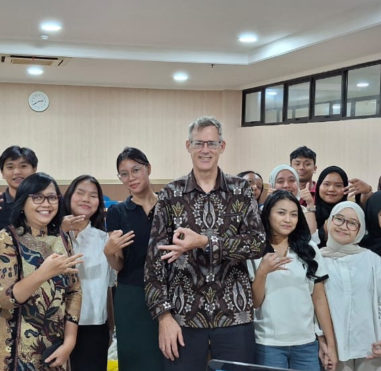
Ben Clanchy
Translator or interpreter (or both): translator
Language(s) and direction(s): Indonesian<>English
Location: Jakarta, Indonesia
Practising as a translator/interpreter since: 2008
Member of AUSIT since: 2021
Main area(s) of practice: legal
Q1:
How did you come to be a T/I?
A1:
I fell into T&I work after a stint at DFAT as a junior diplomat. We had some language training, and regularly got shoved into impromptu interpreting assignments on that basis. After around three years at the Australian Embassy in Jakarta my stint finished. I left DFAT and moved into private legal practice there, and sat the NAATI translator test on a bit of a whim. The main reason I moved into translation is that it is more flexible timewise than interpreting. In those days, all you needed to be eligible to sit the test was a letter from someone saying that you had done some work in the field – no formal training was required. I don’t do a lot of translation work per se and the work I do take on typically doesn’t need a NAATI stamp, but the qualification does reassure clients that I can understand the contracts and other documentation in hand.
Q2:
Tell us about a project you have worked on that was especially interesting or challenging (within the bounds of confidentiality of course).
A2:
At the top of the list would be interpreting for Australian federal ministers in meetings with their counterparts during my time with DFAT – sometimes in closed meetings, and at other times in open public meetings or at press conferences. At times, their counterparts would slip into dialect or slang, which was challenging. Sometimes these assignments were planned, other times impromptu, but in hindsight these tasks would all have been better executed if I had had the benefit of the formal training which is now a prerequisite for sitting NAATI’s tests. I later took the Tafe SA online interpreting course, and found it to be well run and a thorough preparation for starting out in the industry.
Advertisement: