


BOOK REVIEW
by Paulina Pietrzak
reviewed by Dr Vera YZ Gu
‘This holistic view moves beyond the traditional focus on language and technical skills.’
This highly insightful exploration of translator education introduces a fresh and much-needed perspective on the role of metacognitive skills.
By emphasising personal resources such as self-regulation, self-assessment and self-reflection, Pietrzak redefines the way translators can approach their development and the challenges they face in a fast-evolving industry. This holistic view moves beyond the traditional focus on language and technical skills, acknowledging the critical importance of psychological and cognitive processes in shaping competent, adaptable professionals.
One of the greatest strengths of Pietrzak’s work lies in her exploration of metacognitive awareness and its direct impact on a translator’s career progression. She effectively demonstrates that skills like self-reflection and self-regulation not only improve the quality of translation, but also enable translators to adapt to new market realities. This adaptability is increasingly necessary in today’s rapidly shifting technological landscape, where machine translation and computer-assisted translation (CAT) tools are becoming ubiquitous. Her analysis of these skills within the context of the broader demands of the industry, including localisation and post-editing, is particularly relevant and timely.
Moreover, Pietrzak’s exploratory study on the self-perceived personal resources of translation graduates provides practical insights into the relationship between metacognitive awareness and professional satisfaction. The study’s findings suggest that graduates with stronger metacognitive skills are better equipped to navigate the complexities of the modern translation market, making these skills crucial not only for immediate translation tasks but also for long-term career success. This practical angle strengthens the book’s appeal to both scholars and practitioners in the field.
In addition to her theoretical contributions, Pietrzak offers educators practical strategies for integrating metacognitive training into their curricula. She advocates for a transformative learning approach that encourages students to engage deeply with their own learning processes through structured opportunities for self-assessment, monitoring and reflection. This empowers students to take control of their own professional growth and adapt to the increasingly competitive translation market.
One area for potential improvement could be integrating technology into metacognitive training. While Pietrzak touches on the impact of technology, a deeper exploration of how metacognitive strategies can help translators manage the cognitive demands of machine translation and CAT tools would further enhance the book’s relevance. Given the increasing prominence of these tools in the translation industry, understanding how to balance technological efficiency with cognitive strategies could provide even more practical support for both students and professionals.
Overall, Metacognitive Translator Training is a thought-provoking and valuable contribution to translation education. Pietrzak’s forward-looking approach challenges traditional models and provides both scholars and practitioners with actionable insights on how to develop adaptable, reflective, and self-aware translators in a rapidly evolving field.
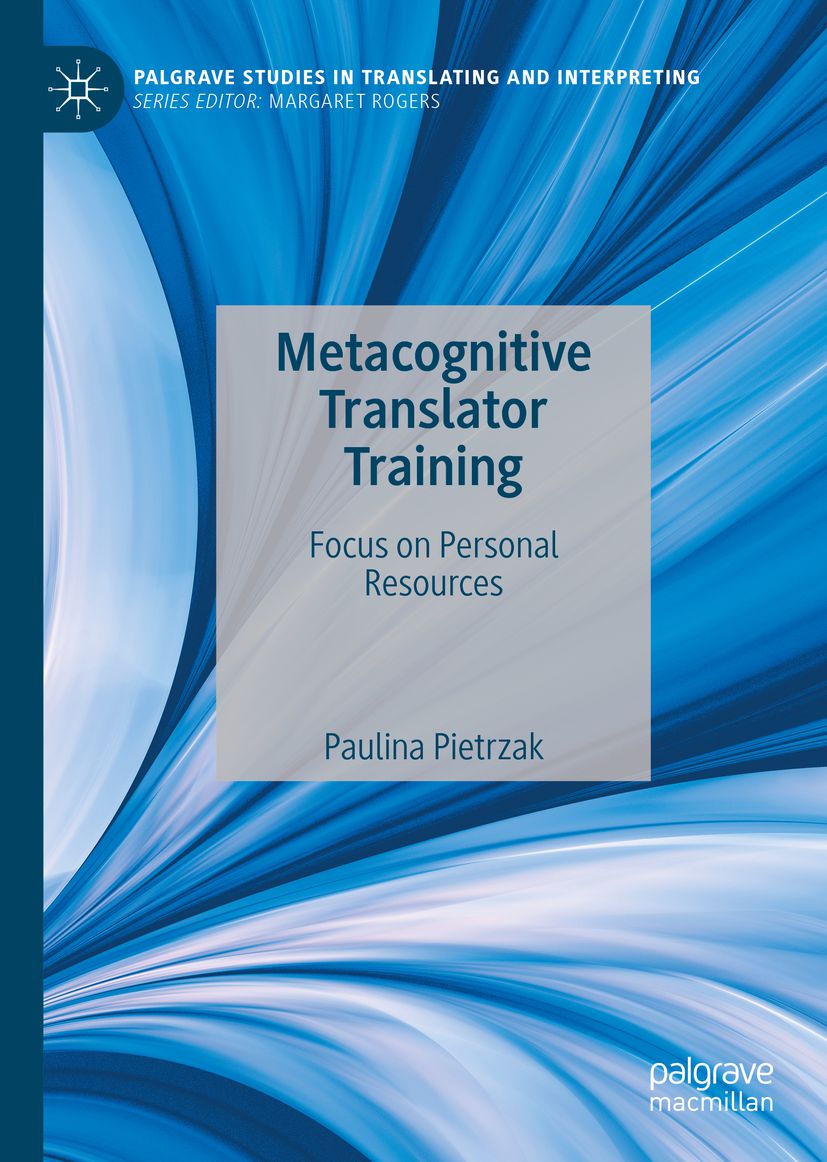
Cover reproduced courtesy of Palgrave Macmillan

Dr Vera YZ Gu holds a PhD in applied linguistics, with a focus on T&I studies, from Monash University. Her research interests lie at the intersection of linguistics, T&I and cognition, with the aim of enhancing T&I pedagogy and practice. Alongside her academic pursuits, Vera is a professional translator and interpreter proficient in Chinese/Mandarin and English, with specialised training in conference interpreting.