




AUSIT NEWS
Dear Member,
As your new National President, I want to ask you something: Why did you become a translator and/or interpreter? Beyond the technical skills, what really drives you?

For most of us, we love our job because we enable understanding across cultures. We enjoy what we do, but it’s tough work sometimes, and we often face assignments alone.
This is where AUSIT comes in. AUSIT is so much more than just a collection of committees – we’re a community united by a shared passion, and dedicated to maintaining the highest standards in T&I.
When you participate in your professional association, you’re not just supporting an organisation. You are among colleagues who really get what you do and what challenges you face, and you have the rare chance to play a part in shaping the future of your profession.
But I have some bad news: our profession is not in a good state. The challenges we are facing now are huge and complex – there is the disruption of the sector caused by the advent of AI, there are the tough working conditions and stagnant pay, and there is the fact that not enough people know what we do and why it’s important.
We need each and every translator and interpreter to step up to these challenges now. The best way you can help solve these issues is to work with AUSIT. Together we can realise a new vision for the future, by: making our budget more sustainable (Finance); better demonstrating our value among practitioners (Visibility); and perhaps most crucially, building more meaningful relationships with stakeholders (Influence). These three goals make up the strategic vision I have for AUSIT – a vision which I believe is essential for our survival and growth as a profession. Let me explain why.
1. Finance — Investing in AUSIT’s Future
The healthier AUSIT’s finances are, the better we can serve our members. In the 2023–24 financial year, AUSIT’s revenue increased to $284,313 (8.9% up from the previous year). However, our expenditure rose to $372,579, resulting in a deficit of $88,266. Each year the deficit has grown larger.
AUSIT does remain financially healthy, with sufficient cash reserves to support its operations. However, an exponentially increasing deficit is not sustainable in the long term.
Cutting costs is one thing, but more importantly, we need to consider how to use our resources more effectively. Every dollar saved or earned directly supports our professional development (PD), advocacy and support services.
Once we balance the budget, we can start thinking about how to best make use of the cash reserves to further the profession. This money, after all, comes from members. In my view, it should be reinvested into the membership. However, this cannot be done until the deficit is defeated.
How You Can Help Your Local Branch With This
- Suggest new revenue streams or cost-cutting measures.
- Share your experience or expertise in finance.
- Help develop projects with AUSIT that could generate income.
2. Visibility — Bringing AUSIT into the Spotlight
Right now, many T&I practitioners don’t fully understand what AUSIT offers them. We need to change this. Some don’t see the value of joining a professional association, while others are unaware we even exist. We know many colleagues work in isolation – why not reach out to them and start a conversation? You could talk about the resources AUSIT provides: PD, networking events, industry updates, and advocacy for better pay and working conditions. Explain that AUSIT isn’t just selling a membership, we’re offering a professional support system. It’s less about value and more about fostering a sense of belonging – and that’s something money can’t buy.
How You Can Help Your Local Branch With This
- Tell your colleagues about how AUSIT has supported your PD.
- Post about AUSIT events and activities on social media.
- Talk about AUSIT at events attended by translators and interpreters.
3. Influence — Growing AUSIT’s Reach
A professional association should be able to use the voice of its members to influence policy in their interests. But despite our incredible members, AUSIT’s voice in the industry right now is smaller than it should be, and we’re struggling to have the impact we know we’re capable of. While other professional bodies command attention and drive change, we’re often left on the sidelines.
It’s not that our members aren’t extraordinary – they are. We simply need more hands on deck. We’re a community that’s passionate about making a difference, but commitment isn’t just about good intentions – it requires action. We need members to build relationships with stakeholders that actually work with T&I practitioners on a daily basis. This is the best way to ensure AUSIT is at the table when decisions are being made that affect our profession.
How You Can Help Your Local Branch With This
- Introduce people who work with T&I practitioners to AUSIT.
- Introduce people who work with T&I practitioners to AUSIT.
- Take up or create networking opportunities to find new collaborators.
Why You Should Get Involved
This is your opportunity to do something extraordinary — to expand your professional network, gain leadership skills and boost your career. By working with AUSIT, you’re part of a community that’s reshaping the T&I profession. Every small action creates ripples of change, and we need passionate professionals like you to drive that change.
We do understand, though, that time is precious and life is busy. Whether you can offer a single hour, a valuable contact or a brilliant idea, your contribution matters. Big or small, every input has the potential to create meaningful progress. Think about the diverse ways you can get involved:
- Want to network? Join your local branch committee.
- Tech savvy? Assist with our digital communication strategies.
- Have industry connections? Help build strategic partnerships.
- Got research insights? Contribute to our PD resources.
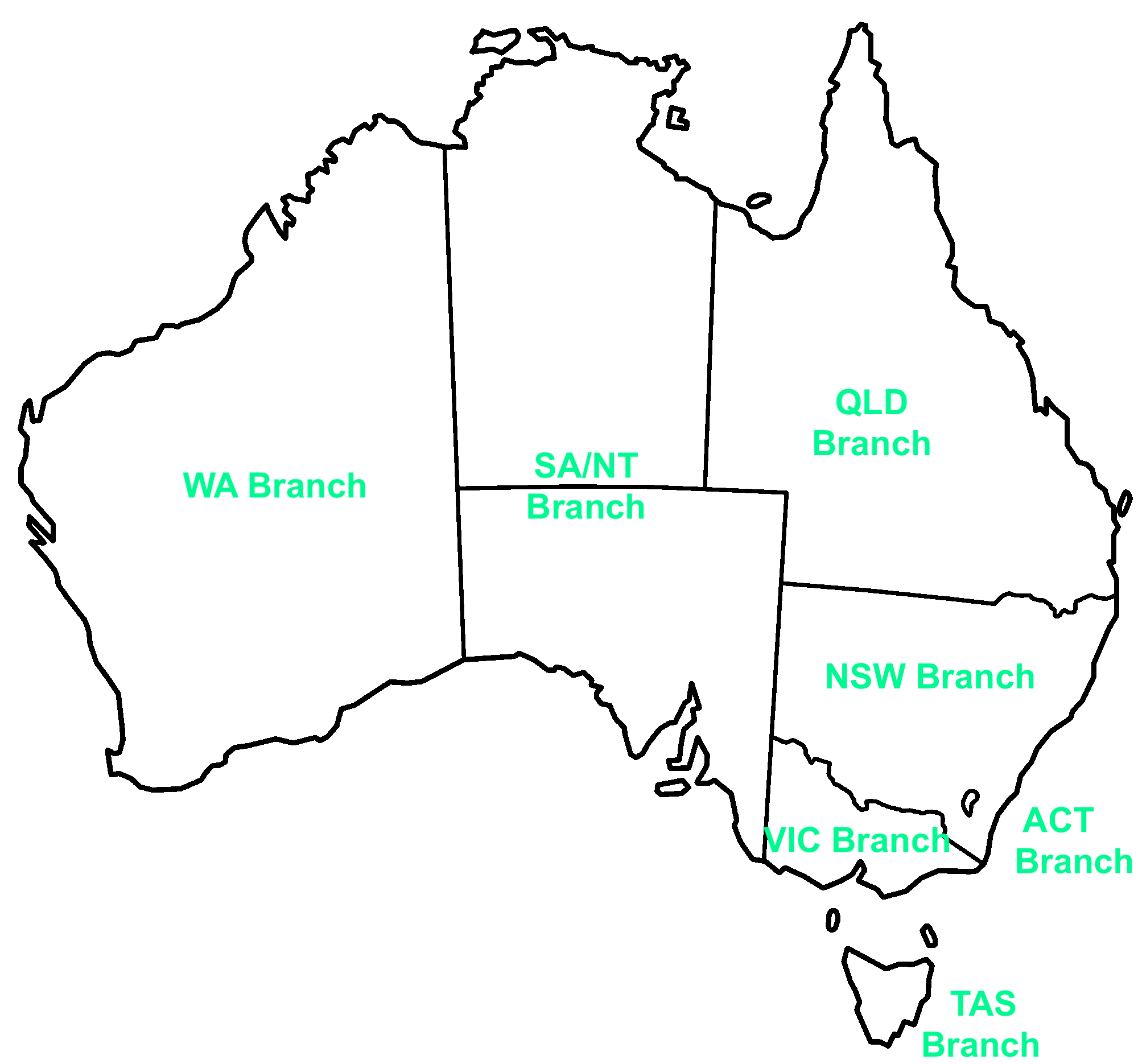
Your profession needs you. Are you ready to make a difference? Reach out to your local branch today and ask how you can get involved – just click on your branch on the map above to email them.
Our profession is changing. With your help, we can be ahead of that change.
With warmth and gratitude,

Carl Gene Fordham, AUSIT National President
Original map image: Golbez, CC BY-SA 3.0, via Wikimedia Commons
Advertisement: