


BOOK REVIEW
by Yáng Shuāng-zǐ
translated by Lin King
reviewed by Marta Menendez
This novel is almost a case study in layered mediation …
The winner of this year’s International Booker Prize – the world’s most prestigious prize for a single book, translated into English and published in the UK or Ireland – is the first work translated from Taiwanese Mandarin to achieve this honour.
First published in 2020, Taiwan Travelogue won Taiwan’s highest literary honour, the Golden Tripod, in its original Taiwanese Mandarin in 2021, while Lin King’s English translation also won the USA’s National Book Award for Literature in Translation in 2024 and the Asia Society’s inaugural Baifang Schell Book Prize in 2025. It has been published or is forthcoming in numerous languages, including Japanese, Korean, Norwegian, Ukrainian, Italian, German, Dutch, Danish and Greek.
Taiwan Travelogue offers a warm yet incisive look at 1930s Taiwan under Japanese colonial rule, using everyday experiences – especially food, travel and conversation – to reveal deeper cultural tensions and connections. At its heart, the novel shows how culture becomes a meeting point between two women – Aoyama, a Japanese writer, and Chizuru, her Taiwanese interpreter – as their relationship unfolds across multiple languages and unequal colonial power structures. Their shared meals and journeys highlight both the beauty of Taiwanese local life and the unequal power structures shaping their relationship. This makes translation not just a background element but the novel’s central mechanism.
The novel repeatedly stages interactions in which Japanese is the dominant colonial language and Taiwan’s languages sit beneath it. Chizuru’s multilingualism – Japanese, Mandarin, Taiwanese, even some French – becomes a symbol of both her skill and her constrained position. Translating this dynamic into English requires that the sense of hierarchy is preserved without the target reader being overtly alerted to the power differences.
Throughout the novel, Chizuru is described as wearing a ‘mask’ – she is professional, polite, withholding. This resonates strongly with the traditional invisibility of the translator: both interpreter and translator are omnipresent, yet rarely acknowledged. The English translation must maintain the opacity of Chizuru’s mask while also letting readers feel the emotional tension beneath it.
This novel is almost a case study in layered mediation: colonial language hierarchies (Japanese over Taiwanese), the asymmetry between metropolitan author and colonised interpreter, and the later Anglophone translation that re-narrates this history for a global readership.
Taiwan Travelogue’s vivid descriptions, emotional tone and cultural depth make it a truly memorable read. The characters feel real and the elegant, immersive writing captures the textures of colonial‑era Taiwan with remarkable sensitivity. The relationship between the protagonists is handled with subtlety and emotional intelligence, and the novel’s exploration of food, language and power dynamics is both compelling and thought provoking. All in all, Taiwan Travelogue is a fascinating and beautifully written story.
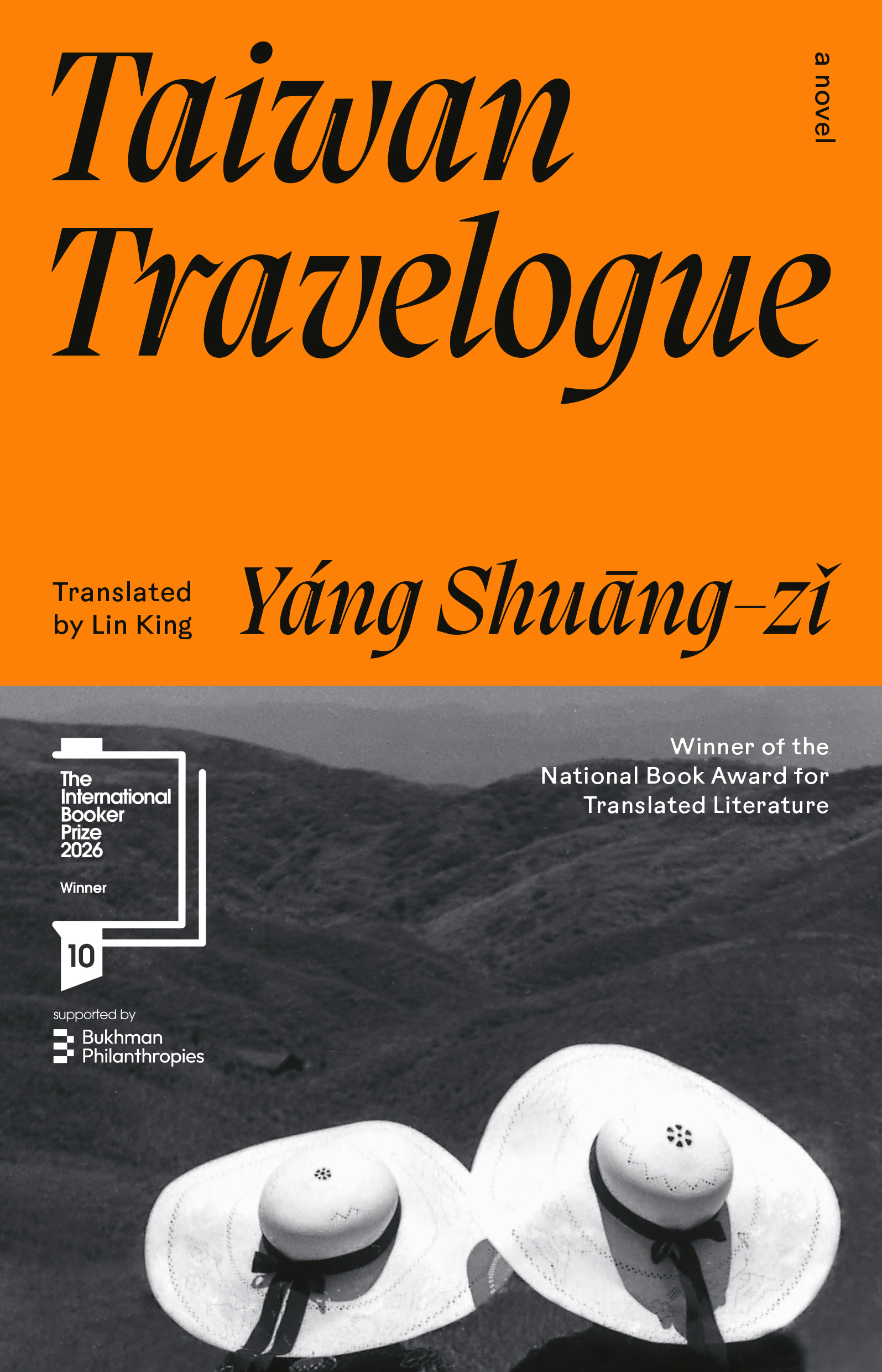
Cover reproduced courtesy of Scribe Publishing

Marta Menendez was born in Buenos Aires, Argentina, and came to Australia in 1984. She graduated from Western Sydney University as a certified interpreter and translator in 1999, and since then has completed two master’s degrees at Western Sydney University, one in social policy and the other in interpreting and translation. Marta works as a freelance interpreter and translator (Spanish–English), and from 2003 to 2025 she was engaged by Western Sydney University as a tutor in interpreting and translation.