


SPECIAL FEATURE: AI IN T&I / BOOK REVIEW
edited by Elena Davitti, Tomasz Korybski & Sabine Braun
reviewed by Nancy Guevara
‘This book is about us.’
I‘ll be honest: when I first picked up the Routledge Handbook of Interpreting, Technology and AI, I expected to struggle.
Routledge handbooks have a reputation for being weighty, dense, and written by academics, for academics. Plus it ran to twenty-two chapters in five parts, with contributors from across the globe … but what I found surprised me. This is a book about us. It’s about the platforms we log into, the tools we experiment with, the conditions we navigate, and the questions we ask ourselves about where the profession is heading.
The volume covers an impressive amount of ground. Part I maps the landscape of technology-enabled interpreting, from telephone and video-mediated interpreting to remote simultaneous interpreting, video relay service, portable equipment, consecutive interpreting and tablets. Parts II and III address training and automation, while Part IV covers the professional settings where we work: conference, healthcare, legal, immigration and refugee contexts. Part V tackles the bigger questions of quality, ethics, cognition, professional standards, workflows, and ergonomics.
Reading across all five parts, the same themes emerge consistently. Almost every chapter navigates the tension between the genuine promise of technology and the real risks of cognitive overload, declining working conditions and erosion of quality. Human expertise, the authors argue, remains irreplaceable in determining when and how technology should be used. The book also provides a thorough exploration of ethics: corporate influence over tool design, data privacy and ownership, the risk of AI limiting linguistic diversity, and the need for responsible use of AI-based automated interpreting in high-stakes settings.
One concept that immediately caught my attention is ‘practisearcher’ (a practising interpreter/translator who also conducts research). For those of us interested in research, this is an inspiring call to action. As one of the authors highlights, evidence-based research is urgently needed to give clients, institutions and policymakers an accurate picture of what technology can and cannot do. Practitioners are well placed to contribute to that evidence, whether by becoming practisearchers themselves, or by participating in academic studies. Many technological developments in interpreting were pioneered by practitioners long before academia studied them, which is a reason not to fear what is coming next, but to engage critically with new tools. The book also makes a strong case for embedding technology and digital proficiency into interpreter training programs, arguing that equipping the next generation with these skills is no longer optional.
To my delight, the chapter on hybrid modalities and live interlingual subtitling covers a research project I participated in, and speech-to-text interpreting is featured in several places. It was also a pleasure to find a chapter by our very own Marc Orlando on digital pens for interpreter training, a reminder of the excellent experimentation and research being done right here in Australia. In fact, several Australian-based researchers are referenced in the book.
And then there was a moment I did not see coming: the final chapter, on ergonomics and accessibility, references an article I wrote for In Touch in 2021* – a practitioner’s piece, cited in a Routledge handbook alongside peer-reviewed research from around the world. It was a reminder that what we contribute to professional conversations matters, even beyond the audiences we originally write for.
Thoroughly researched, carefully edited and rigorously referenced, this handbook offers practitioners a comprehensive refresher on the history of technology in interpreting settings, from the tools we have used for decades to those currently emerging. More importantly, it addresses the questions that matter most to our daily practice: quality, working conditions, professional standards and the ethical use of technology and AI. It is also well worth reading if you are interested in exploring computer-assisted interpreting: the volume includes a comprehensive, research-based overview of tools and apps, from terminology management and notetaking applications to CAI tools and ASR-assisted workflows.
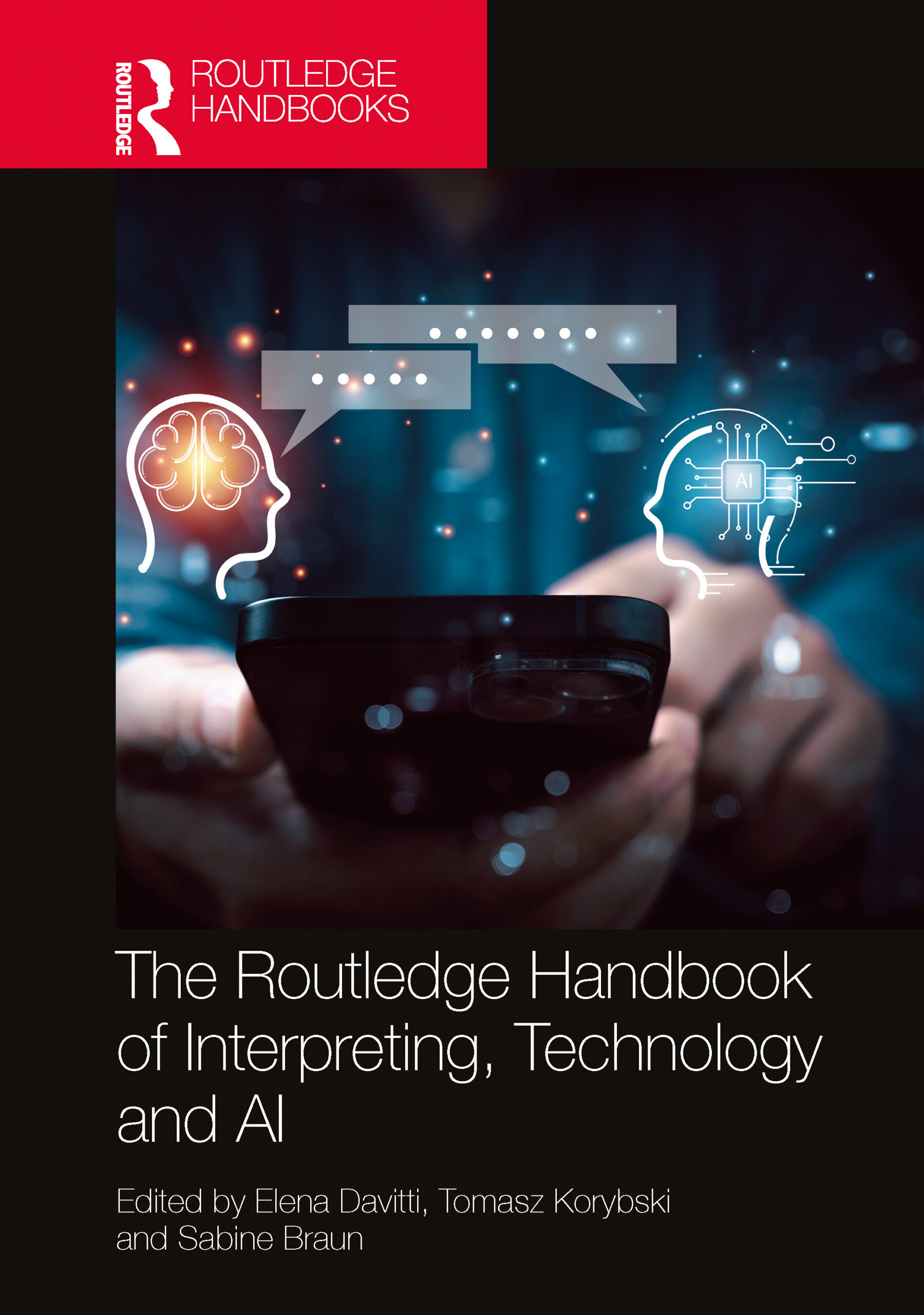
Cover reproduced courtesy of Taylor & Francis Group
If a practitioner’s article written for an Australian audience can find its way into a Routledge Handbook, this book was written for us too.
* You can find Nancy’s article here (scroll down to the Summer 2021 issue, pages 16–17).
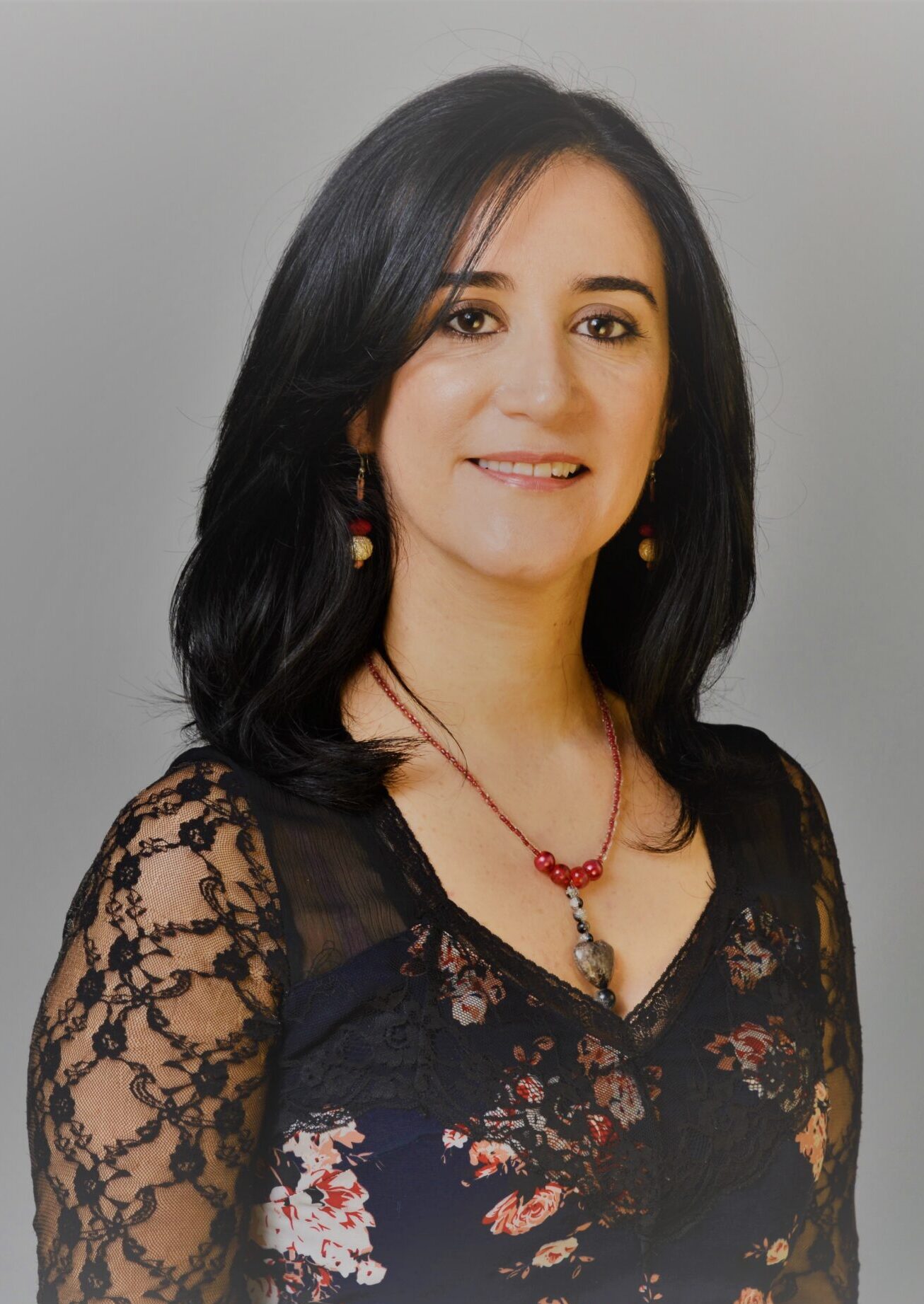
Spanish translator, interpreter and live subtitler Nancy Guevara has specialised training in speech-to-text interpreting from the University of Vigo, Spain and a Master of Accessibility to Media, Arts and Culture from the University of Macerata, Italy. She is a seasoned NAATI practitioner with solid experience providing live subtitling services for high-profile international clients and public institutions.