


An early interview in this series – which focuses on people who work with translation and/or interpreting practitioners, but aren’t necessarily practitioners themselves – was with the director of a small Australian publishing house. Our interviewee in this issue, Ana Bermúdez, is a publisher at a much larger international publishing house.
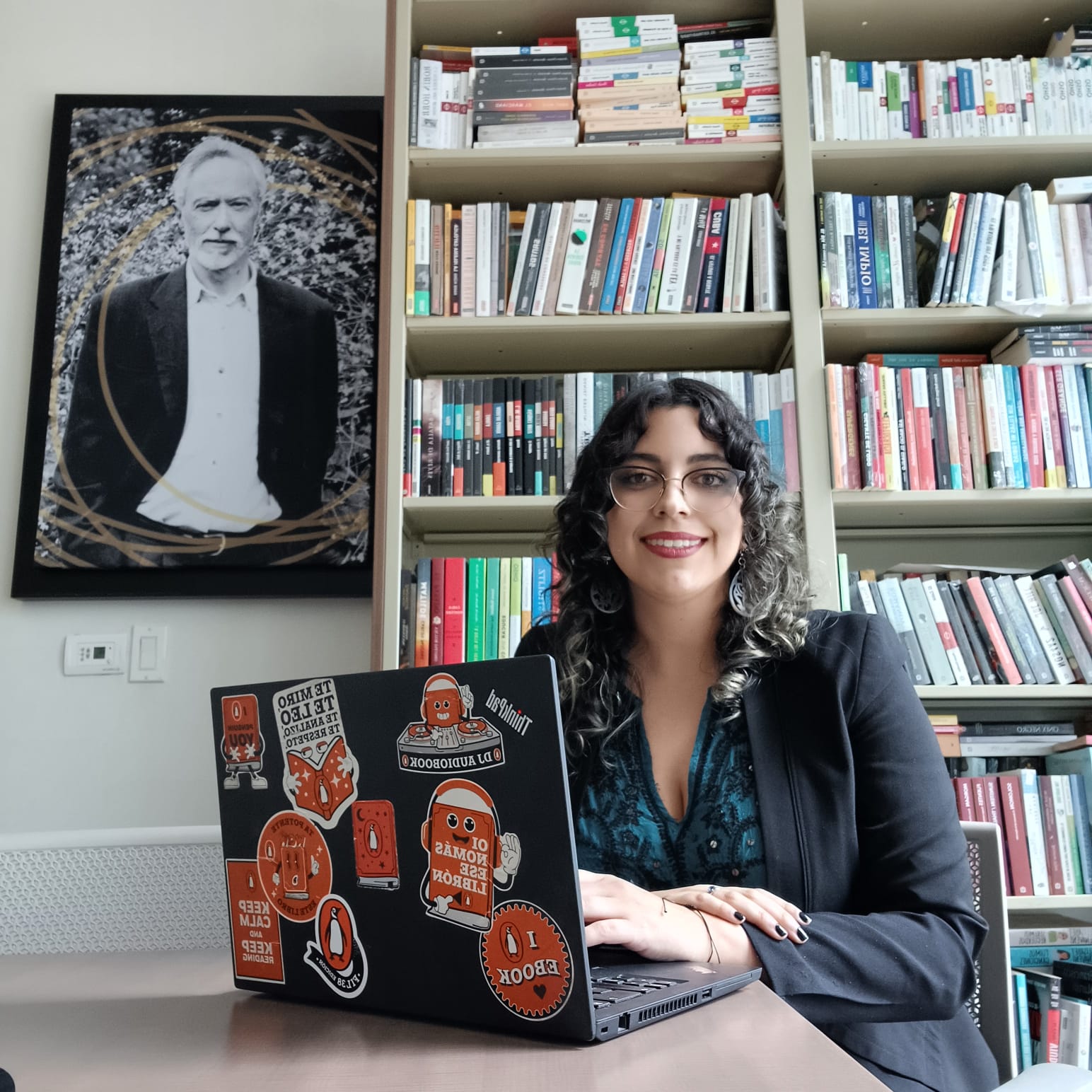
Ana at work
1) How do you find and choose a translator for a particular book you’re planning to publish?
We first check our database of external collaborators for a translator whose profile, experience and background best match the book, timeline and translation type. If we find someone suitable we contact them, offer the project, and set a deadline. If they are available, we proceed with the contract. If no suitable translator is available, we seek recommendations internally, and review candidates’ CVs with special attention to the types of texts they have worked on previously. Then we contact the best fit, and if they are interested, we explain the work, timeline and administrative requirements. If they decide they want to take on the translation, we then start our onboarding process.
2) How does the process of obtaining international publishing rights work?
Acquisition editors constantly communicate with international literary agencies, as they are the intermediaries between us and rights holders. They send us catalogues of titles they manage, and we review them. Sometimes the agents send title highlights to specific editors whose editorial line matches with the type of book in question. If a book interests us, we request reading material from the agency, and if the content captivates us, we make an offer for the Spanish rights. The agency informs other editors, and sets a deadline for offers. If there are several offers, the agency may ask us to raise our offer and/or change our conditions. Further rounds may occur, until two final competitors remain. The agency then reviews the two options with the rights holder, who selects the offer they prefer. The successful publisher is notified, and contract drafting begins.
3) If a translator brings a book translation proposal to you and your publishing house decides to take it on, do you usually hire that same translator for the project?
It is uncommon for translators to bring us book translation proposals, but we are open to it. If this happens, we would naturally offer the translation to the proposing translator, as their interest led to the book’s inclusion in our offerings. It would be unusual not to do so, unless administrative reasons or a mismatched profile prevent it.