


LITERARY TRANSLATION
Our December (Summer) 2023 issue featured an article by Elaine Lewis, a member of the Australian Association for Literary Translation (AALITRA), about Australia’s first ever ‘translation slam,’ which she had recently co-organised. Since then, AALITRA has organised two more translation slams, during Melbourne Writers Festival 2025 and 2026. AALITRA member Laura Hasegawa moderated this year’s slam, and reflects here on what such events do for translators.
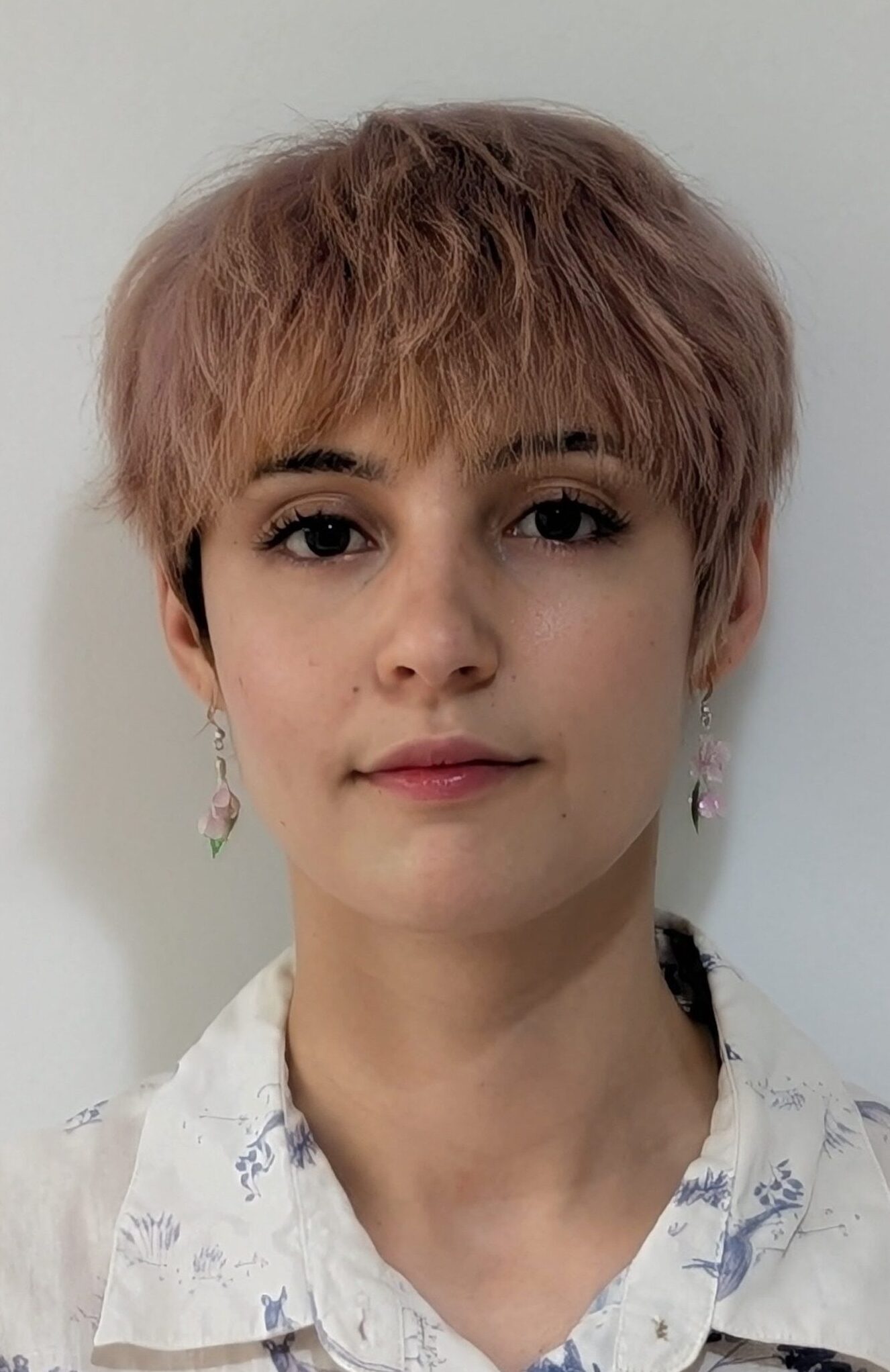
May 2026. Two translators, an author and a moderator – all on the same stage, in the magnificent State Library of Victoria.
I had the pleasure of moderating the event. In the lead-up, I was asked many times what exactly a ‘translation slam’ was. My elevator pitch was as follows:
Two translators are given the same source text, and each produce a translation. The similarities and differences between the two unique translations are then discussed on stage, and in the process, the subtle art of translation is showcased.
Since the event, however, I’ve added an extra sentence to my pitch:
It’s also an opportunity for translators to step into the spotlight.
Between the reach of MWF and the grandeur of the State Library, I couldn’t help but be struck by the increasing visibility translators were being given by this event. The Melbourne Writers Festival has long celebrated writers, both local and international, but the names of translators have rarely made headlines on their own. That’s slowly changing. Across the world, translators’ names are increasingly appearing on the covers of the books they translate. The International Booker Prize has recognised both author and translator equally since 2016. And in recent years in Australia, translators have started sharing the same spotlight writers have long enjoyed. Sydney Writers Festival 2024 saw sessions like ‘Found in Translation,’ in which translators Jennifer Croft, Daniel Hahn and Stephanie Smee spoke about their work bringing writers such as Nobel laureates Olga Tokarczuk and José Saramago to English-speaking readers, followed by the 2025 and 2026 Translation Slams at MWF.
This years MWF Translation Slam brought together author Hiroko Yoda, Tokyo-based writer and translator Matt Alt and Australian translator Haydn Trowell. The Japanese source text, written by Yoda, was a genre-defying short story: part parody, part ghost story, and written in the form of a screenplay.
One of the central challenges of the translation was how the humour of a parody survives when the very thing it’s parodying becomes obscure in translation. This conundrum extended across multiple levels. First, the text was a parody of Rashōmon, a story in which different witnesses give conflicting testimonies of the same event. Second, the text is littered with references to Japanese pop culture. And third, the text features characters known as yōkai – variously translated as spirits, demons, monsters, goblins or ghosts.
At each layer, the parody operates on the assumption that the reader has the cultural context to understand what is being referenced and how it is being subverted or iterated upon. This was something that the author, too, was very much aware of, having worked on several books on yōkai for English-speaking readers. However, that difficulty became the Slam’s greatest asset, giving both translators the chance to show – in detail – how they worked through it.
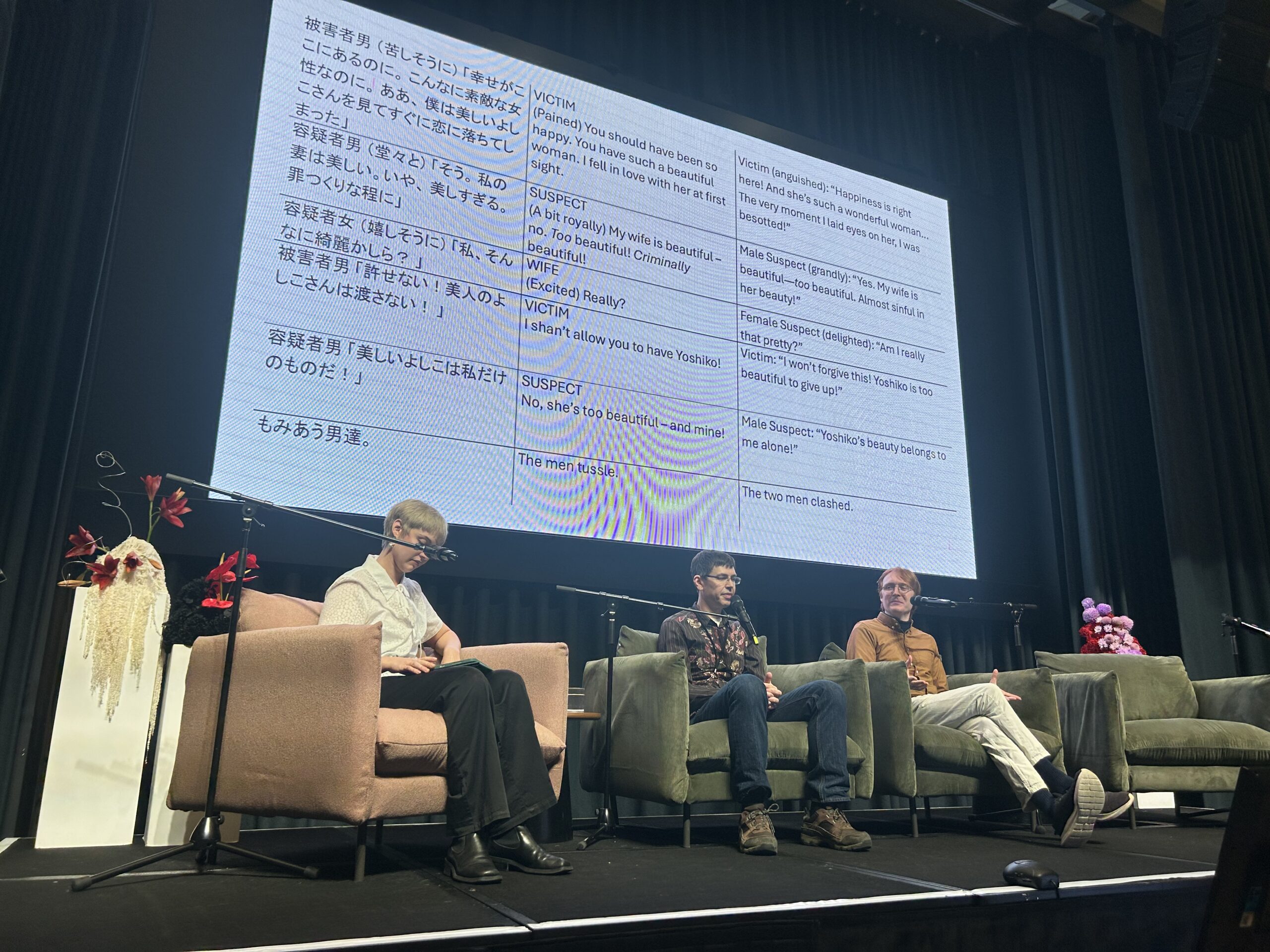
There are dozens – if not hundreds – of metaphors used to describe the work of literary translators. One of the simplest, I think, is that literary translation involves being a brilliant reader in the source language, and an excellent writer in the target language. Considered this way, it only makes sense for writers and translators (or ‘rewriters,’ if you will) to be equally recognised for their writing prowess.
At the end of the event, AALITRA handed out flyers to promote the organisation. Nothing unusual, except for the hook, which read: ‘You have a favourite author. Who’s your favourite translator?’ It is my hope that the more we do events like this, the more people will be able to answer that question.
Laura Hasegawa is an emerging Japanese>English translator currently completing her PhD in translation studies with a focus on the polysemic concept of voice in translation. She recieved an AUSIT Student Excellence Award in 2023 while researching the translation of Japanese onomatopoeia for her master’s in T&I, and published her reflections on the topic in the Winter 2023 issue of In Touch.
Advertisement: