For Students, Educators & Researchers
Thinking of studying translation and/or interpreting?
Why become a Student Member of AUSIT?
AUSIT Language Divisions
AUSIT Mentoring Program
AUSIT Student Excellence Awards (annual)
AUSIT Student Translation Competition (annual)
Resources and Grants for Researchers
AUSIT’s Educational Affiliates
Videos & Podcasts
For Practitioners
The Benefits of being a Member of AUSIT
Join AUSIT: Application Form
Guidelines and Resources for Practitioners
The AUSIT Code of Ethics
Professional Development
AUSIT Mentoring Program
Webinars
Free NAATI-Sponsored Webinars (conditions apply)
AUSIT Events
In Touch magazine
AUSIT Language Divisions
Blogs (including past President’s Newsletters)
Videos & Podcasts
AUSIT Awards and Fellowships
The Sydney Declaration (AUSIT National Conference Statement 2023)
Interpreter Feedback Form and Reports: experiences in courts and tribunals
Duration:
1 hr 50 min
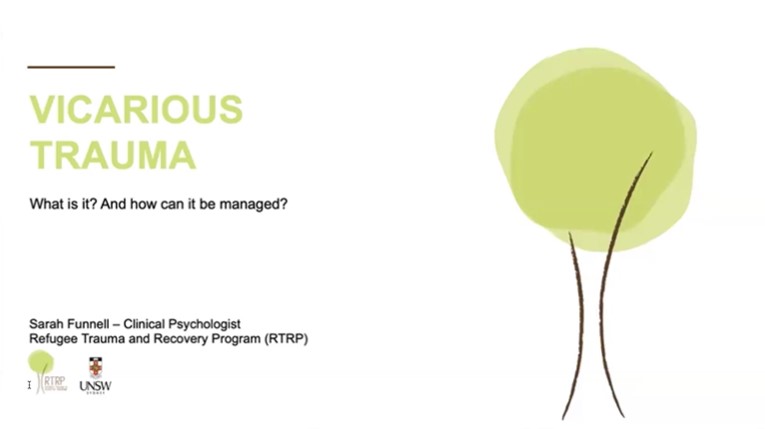
Presenter -
A/Prof Miranda Lai, Sara Funnell
$105.00 (Non-Member) | $35.00 (Member) | $300.00 (Non-member Institution) | $150.00 (Affiliate)
Vicarious Trauma is an occupational hazard for many helping professions. It results in negative impact to the professional’s belief system when they are repeatedly exposed to other people’s trauma. But interpreters and translators seem to be a forgotten cohort in the equation, while they play a critical role in facilitating the communication between these professionals and their clients. Having to cognitively process other people’s traumatic stories and convey them into the target language is not the same as simply hearing or watching sad stories. This webinar will feature two presentations, each offering a unique perspective on the impact of vicarious trauma and effective strategies for managing it.
These presentations will cover:
What is vicarious trauma;
The impact that working with individuals who disclose traumatic events can have on you, both personally and professionally;
Strategies that individuals can use to help manage and mitigate vicarious trauma, burnout and stress;
Insights from recent Australian studies on practitioners’ experiences;
Practical recommendations from practitioners on strengthening emotional wellbeing and professional sustainability.
Dr Miranda Lai – has conducted research into vicarious trauma and self-care of interpreters and translators. Her publications on this topic include: Vicarious Trauma among Interpreters (2015), Professional Interpreters and Vicarious Trauma: An Australian Perspective (2022), and Interpreters’ Resilience and Self-care During Pandemic Restrictions in Australia and New Zealand (2022).
Sara Funnell – is a Senior Clinical Psychologist at the Refugee Trauma and Recovery Program (RTRP) and board-approved supervisor. Sarah has substantial experience working with PTSD and complex trauma. She has a strong commitment to promoting positive and meaningful change in the lives of individuals and families affected by mental health issues.
Other webinars you might be interested in
for court interpreters to report incidents or issues that occur in court interpreting assignments.
Purpose and function of this information submission form.
This form enables you to report issues or problems that you encounter in the course of court interpreting assignments. These issues and problems will be collected by AUSIT to report to the JCCD (the Judicial Council on Cultural Diversity) to monitor the implementation of the Recommended National Standards. The reporting of these issues and problems enables AUSIT to work with the JCCD to suggest steps to address these issues and to avoid the repetition of these problems in the future.
"*" indicates required fields
Select your desired option below to share a direct link to this page